• Home
  • Acting
  • Essays
  • Etsy Store
  • Contact
  • Bio
  • Photos
  • Zandy Hartig's Artwork
  • Resume
  • Instagram
  • Menu

Zandy Hartig

sketches and painting
  • Home
  • Acting
  • Essays
  • Etsy Store
  • Contact
  • Bio
  • Photos
  • Zandy Hartig's Artwork
  • Resume
  • Instagram

from The Bulwark, 01/22/2025: Revisiting David Lynch's 'Mulholland Drive,' from A City on Fire →

January 10, 2026

THE FIRST TIME I SAW Mulholland Drive was in 2002 while I was visiting Los Angeles for pilot season. My friend’s aunt, whom I didn’t know until that night, had invited me to join her at the Vista Theatre on Sunset. The movie left me utterly discombobulated. It perplexed and disturbed me in equal measure, so much so that I actually felt dizzy. Everything outside looked sinister or compromised. The man smoking a cigarette by the lamppost, what did he know about me? Was that terrifying, filthy bum in the movie lurking in the alleyway behind the theater dumpster? Why did everything around me seem so dark and yet vivid all of a sudden?

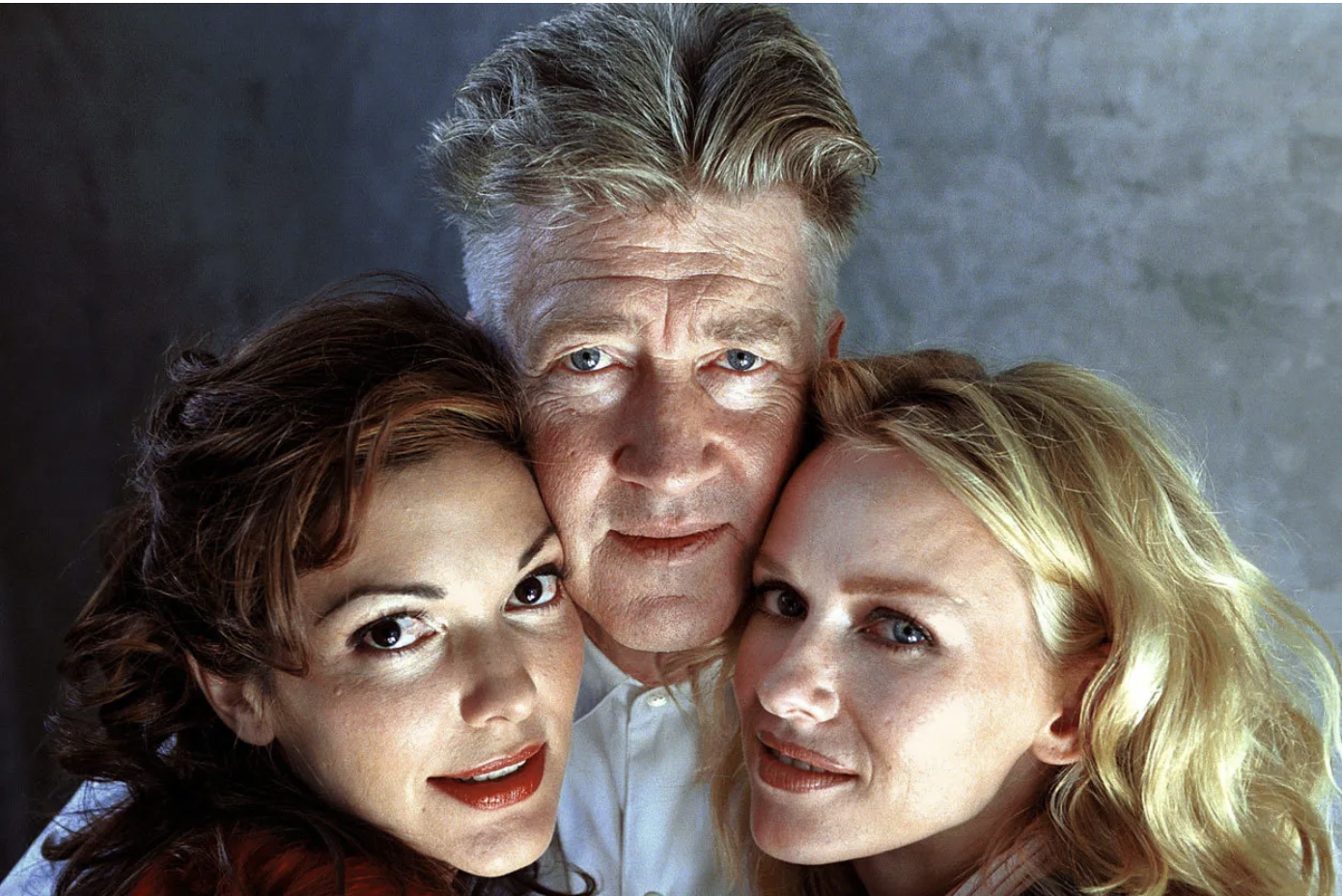
My friend’s aunt had kindly reserved a table for us at Jones Hollywood Cafe, but I could barely pay attention to my meal or her. I focused on another booth, a man in his sixties with a pretty woman in her twenties, the orange light engraving the deep lines in his face and accentuating the glow of youth on hers. When he laughed, I could see his big, white teeth, and they seemed ready to devour her. She reminded me of Betty, the ingenue played by Naomi Watts in Act I of the movie, impressionable and hopeful. If I moved out to Los Angeles to pursue my own acting dreams, would I end up like Diane Selwyn—Betty’s alter ego in Act II—bitter and broken? Was the filmmaker sending me a dark-blue key but warning me not to use it to open that Pandora’s box?

Such is the power of Mulholland Drive, which I revisited this week when I heard the sad news of director David Lynch’s passing after being evacuated from his home during the recent wildfires. Even though the first time I found the film confounding, it left an indelible impression on me, and its mysterious and ominous allure lingered. Whenever I rewatch Mulholland Drive—as I have many times over the years—its meanings bloom and deepen. I now find it, strangely, to be one of Lynch’s most straightforward stories. In the vein of the Brothers Grimm, Mulholland Drive is a dark, perverse fairytale about Los Angeles: the fantasy of Hollywood stardom, the gritty underside of show business, and the liminal space where the two blur together.

As Lynch put it in Catching the Big Fish: Meditation, Consciousness, and Creativity: 

I love Los Angeles. . . . The golden age of cinema is still alive there, in the smell of jasmine at night and the beautiful weather. And the light is inspiring and energizing. . . . It fills me with the feeling that possibilities are available. . . . It was the light that brought everybody to L.A. to make films in the early days. It’s still a beautiful place.

The dream for the golden age of cinema is the Act I of Mulholland Drive. In my mind, it is the fantasy portion of the movie. Personified by bright-blonde “Betty” —an old-fashioned name harkening back to Bette Davis (highbrow), or Betty from the Archie comics (lowbrow)—Naomi Watts comes out to Hollywood with stars in her eyes. In the way Lynch chooses to light and shoot her, she literally glows with optimism. She wears opalescent nail polish and a bright pink sweater with rhinestones so that when she moves, she gleams and glitters. Watts’s performance is so stylized that while I was watching the film the first time I couldn’t believe how syrupy she was. That is until she went into her “big break” audition scene, when all of a sudden she transformed from a wide-eyed innocent into a seductress, fully in control of her scene partner, a seasoned, slick George Hamilton-type, old enough to be her father. I realized it was Lynch’s and Watts’s plan all along to make Betty naïve, perky and over the top in order to stun the viewer in that gritty, sexualized audition scene. A star is born.
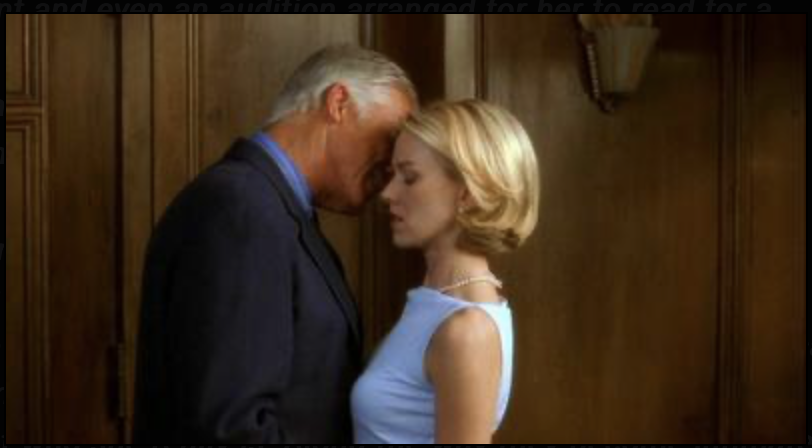
The post-audition Betty also is fully in control of “Rita” (Laura Harring), the mysterious, dark-haired bombshell who wanders away from a deadly car wreck and an assassination attempt on Mulholland Drive without any memory of who she is. Betty is Rita’s heroine, helping the damsel in distress piece together her true identity and protecting her from the dark forces pursuing her. The more Rita depends on Betty, the more they are drawn to each other, and in one of the most tender and sensual scenes I’ve ever seen on film, Betty invites Rita into her bed and seduces her while saying “I am in love with you,” over and over like an incantation. It’s as if Cinderella and Snow White became lovers. They merge into one as they kiss. This time when I watched the scene, there is a shot I am convinced is Lynch’s homage to Persona, where Rita’s profile merges with Betty’s full face.

ACT II OF MULHOLLAND DRIVE is the “reality” section of the movie. Watts is no longer the upbeat starlet Betty but rather Diane Selwyn, a jaded, hard-bitten actress pining for Harring, who is now Camilla Rhodes, a glamorous actress on the rise who is leaving her ex-lover Diane far behind in her quest for fame. Diane is the dependent one in this role. She is talentless and whatever acting jobs she’s gotten have been tossed her way by Camilla. She fantasizes about their time together before Camilla ditched her for a famous director, Adam Kesher (Justin Theroux). The warm remembrances of their lovemaking are gone. All that is left is raw sex and obsession. While Camilla still glows, Diane looks tough and hardened and drained of color. She is shabby in her worn-out bathrobe. She sleeps late into the day, wears no makeup, and her hair is jagged and dirty. Lynch shoots her in a harsh light. She seems to have suddenly developed lines in her face.
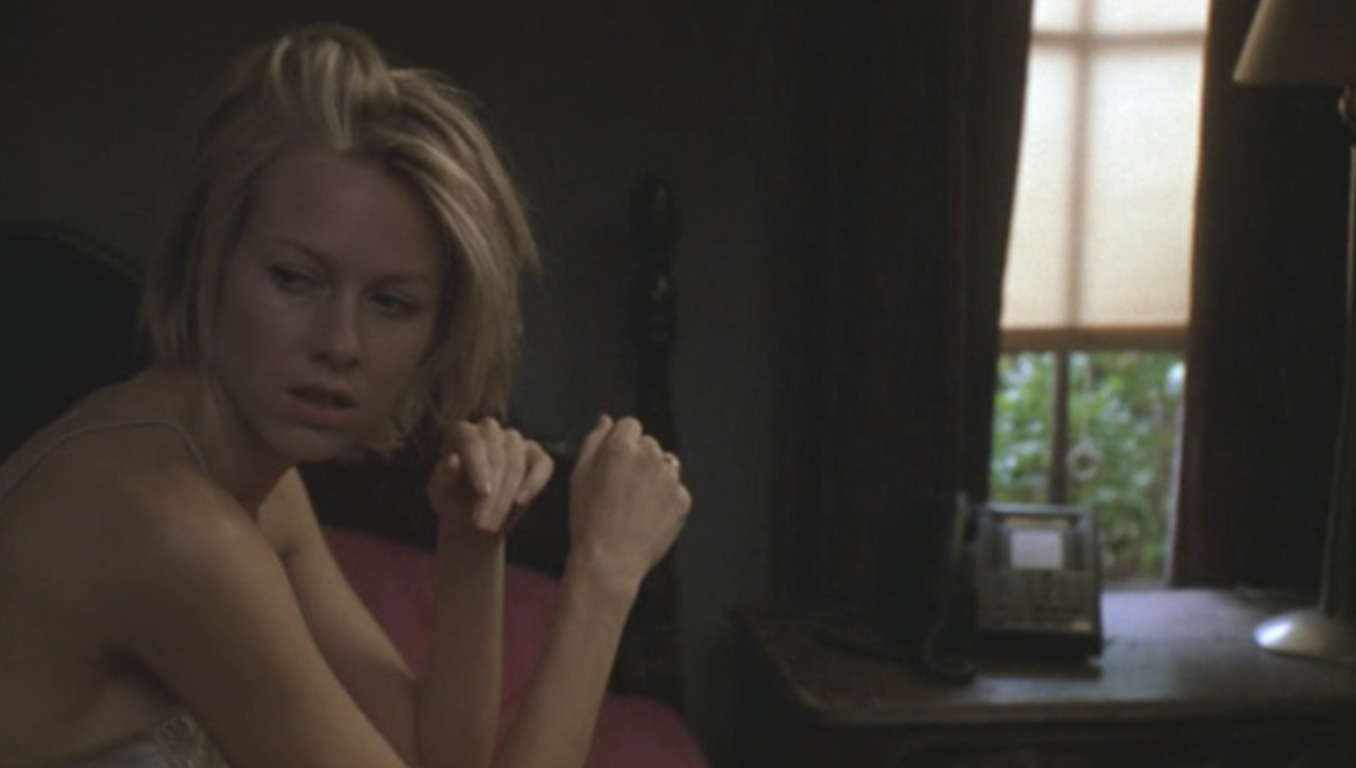
Every time I watch Naomi Watts’s performance here, I am struck by how brave it is. Her masturbation scene is so raw and painful in its vulnerability that I have a hard time watching it. David Lynch must have inspired so much trust in his actress that she felt safe to express herself with such literal and metaphorical nakedness. I am in awe of him and her. 

Whereas the first part of the movie is about the myth of Hollywood, the second part is about its dark, sleazy underbelly. Camilla torments Diane professionally and personally, and Diane’s love devolves into jealousy and hatred. She becomes a bit player in Camilla’s life, both on camera and off. The film’s glamorous Hollywood Regency design in Act I is replaced in Act II by Diane’s slovenly apartment, a flat, painted set background on a soundstage, and Adam’s harsh, angular, modern house in the Hollywood Hills. Instead of being pursued by ominous, enigmatic mobsters, all that’s threatening Diane in the second part of the movie are her poisonous thoughts. And when the hitman Diane hires leaves the blue key on her coffee table signaling that he has successfully completed his task (a basic blue house key compared to the sparkly cobalt, stylized key Rita finds in her purse) she is consumed by agony and guilt for killing her former lover. The old couple whom Betty met on her flight from her hometown to LAX, have now mutated into demons who crawl out from the mysterious blue box held by a dark, hideous bum behind the dumpster, and chase Diane until she shoots herself in the mouth. Diane’s Hollywood dream ends up a seedy, sordid nightmare. The rawest of neo-noirs.

What unites the two sections is that the film begins and ends at night atop Mulholland Drive, a physical and psychological threshold between fantasy and reality. It’s where the Hollywood Hills also begin and end. And so David Lynch makes it the locus: where Camilla is killed off (whether literally or metaphorically, depending of one’s interpretation) and “Rita” is born. Knowing Lynch’s dedication to Transcendental Meditation and his belief that the spirit can never be destroyed, I think he intends Mulholland Drive to be the place where this transition from life to death, from corporeality to make-believe and back again, happens.
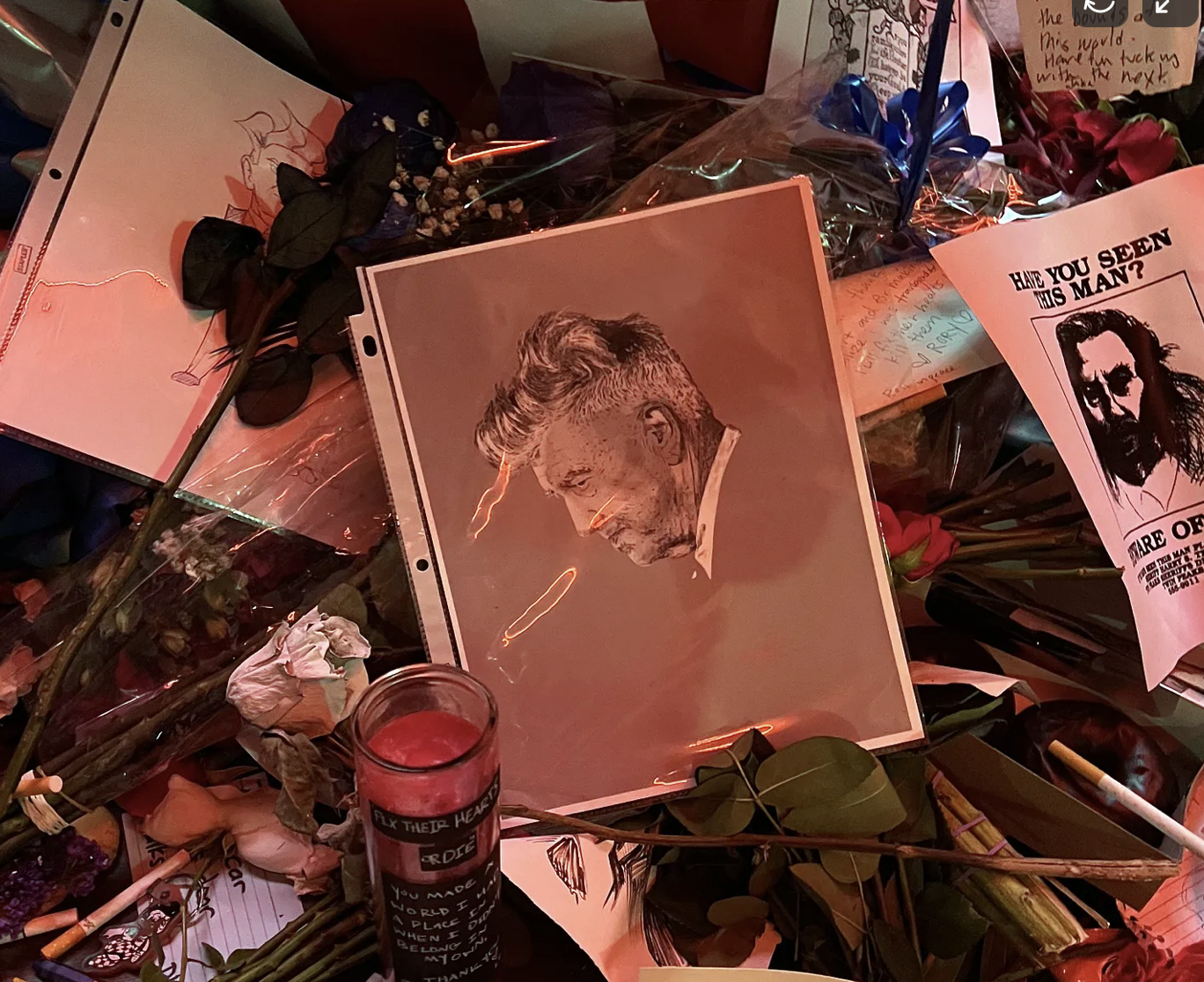
A spontaneous offrenda, of sorts, left at Bob’s Big Boy, one of David Lynch’s favorite local spots for a cup of coffee and a slice of pie.

IT’S NO SURPRISE TO ME that David Lynch actually lived in a blue house that veered off this infamous road. Los Angeles, represented by Mulholland Drive, is a dark path, full of twists and turns and peril. We have sadly seen this the last few weeks in the devastation of the L.A. wildfires. But the glittering lights down below in Hollywood are omnipresent. 

Mulholland Drive is David Lynch’s twisted love letter to L.A. In his view, you can’t have light without the darkness, you can’t have joy without pain. And recently, watching helplessly as neighborhoods were consumed by fire, I realized I love this place more than I’d thought. As a formerly reluctant transplant and a struggling actress with big dreams myself, I now willingly call it my home. Los Angeles opens up its sensuousness to its pioneering inhabitants like the night-blooming jasmine at midnight. Angelenos just have to appreciate its particular complexity, mystery and contradiction the way Lynch did. As a director famously beloved by his actors and coworkers, and to whom many owe their illustrious careers, David Lynch became a legendary part of the Dream Factory that drew so many people, himself included, out to Hollywood in the first place. His energy will linger on in the Los Angeles light he loved so much.

Comment

from The Bulwark, 11/14/2025: The Upside of the Lowdown

January 10, 2026

FULL DISCLOSURE: I have a real soft spot for Oklahoma, having worked there several times and having loved the people I’ve met while working, so I am inclined to relish The Lowdown (now finishing up its season on FX). But even if I’d never stepped foot there, I would still admire writer-director Sterlin Harjo’s new show for the genuineness, quirkiness, humor, and melancholy lying beneath its Sooner State clay.

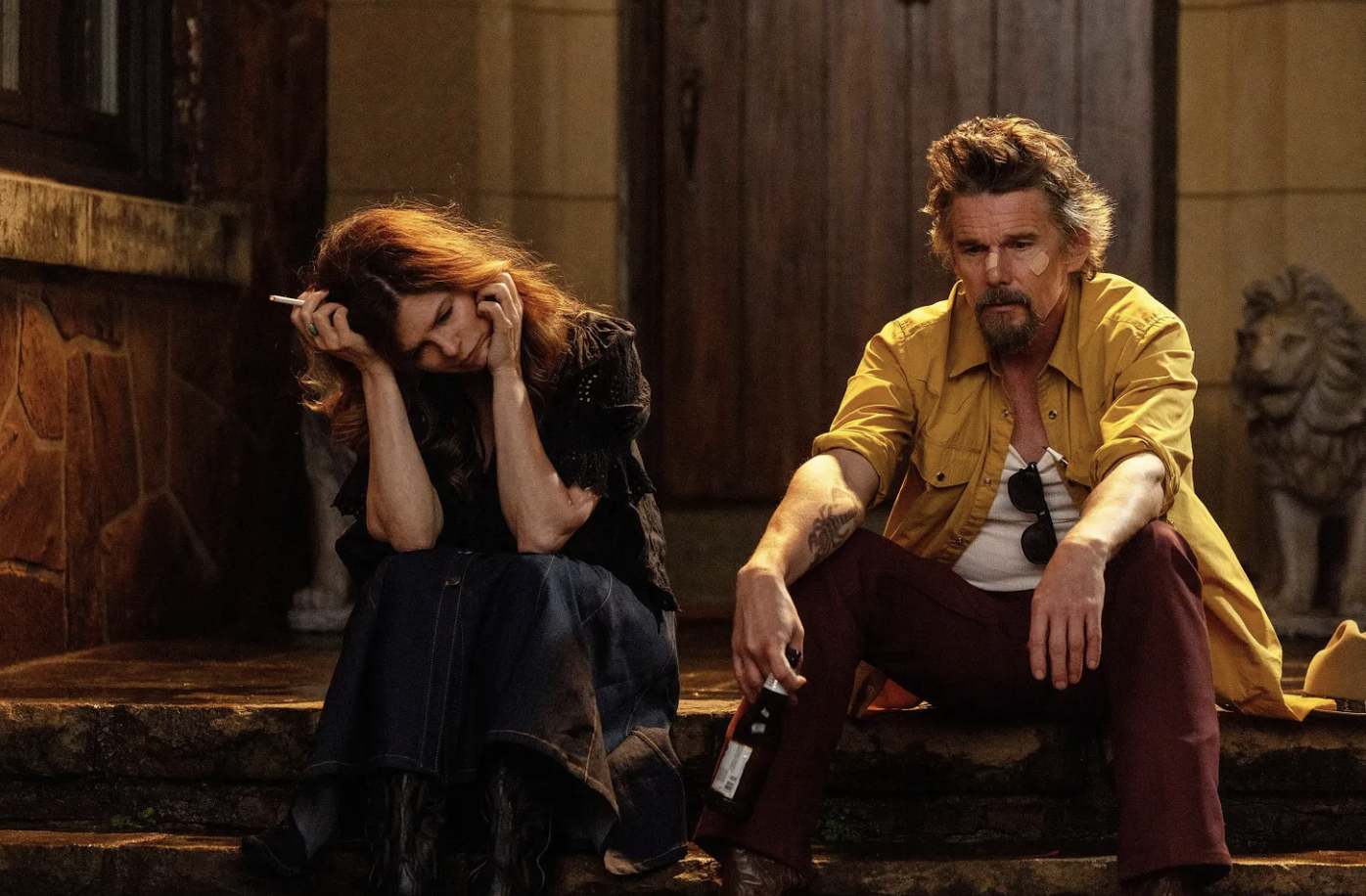
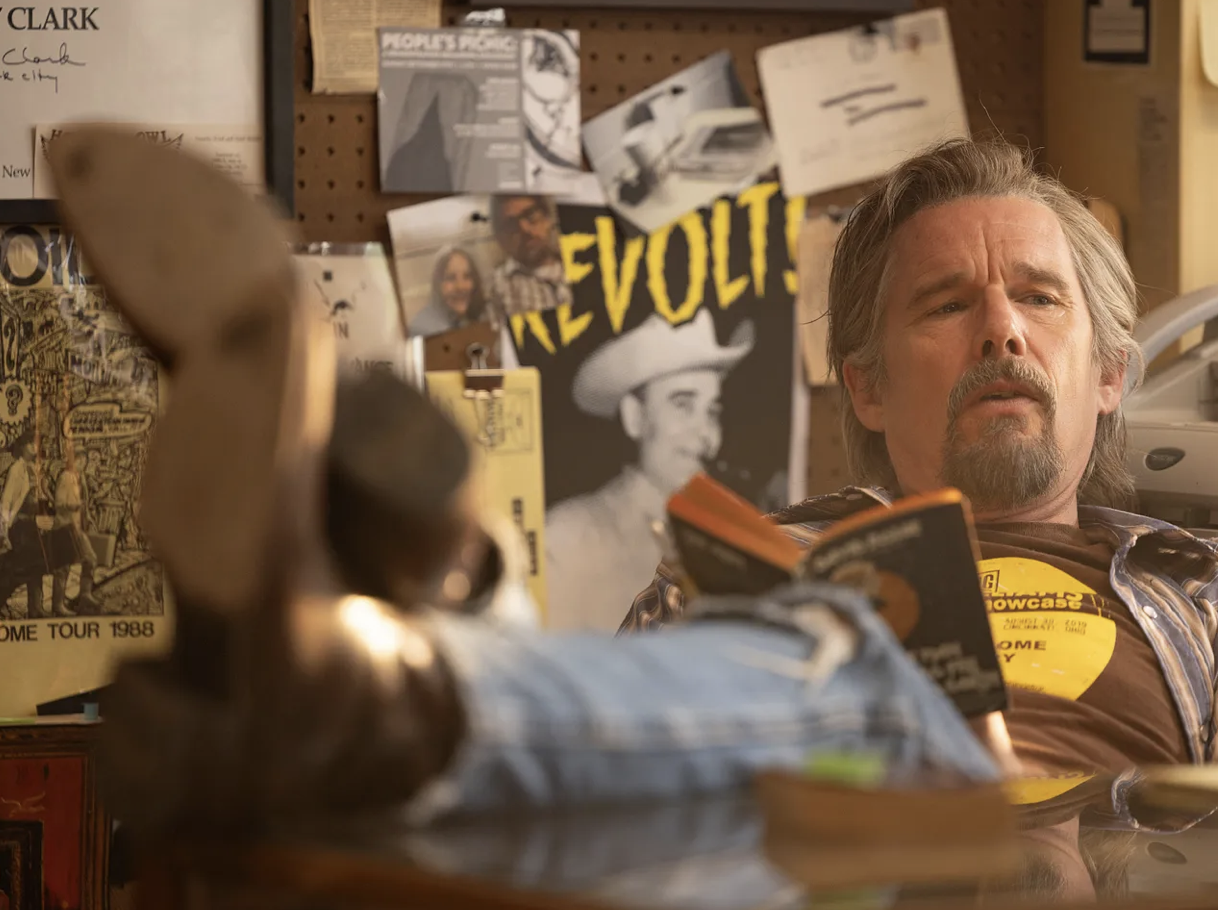
Lee Raybon (Ethan Hawke) is a rare-books dealer in Tulsa, and a self-described “truthstorian,” which he defines thus: “I read stuff, I research stuff, I drive around and I find stuff. Then, I write about stuff. Some people care, some people don’t. . . . Let’s just say I’m obsessed with the truth.” He is chronically injured, broke, and somewhat hapless, but he’s undaunted in uncovering the seedy underbelly of “respectable” Tulsans, notably the most influential family in town: the Washbergs. One Washberg, Donald (Kyle MacLachlan), is running for governor; his black-sheep brother Dale (Tim Blake Nelson) was a closeted oddball who may or may not have committed suicide. Lee is determined to investigate Dale’s death, and along the way unearths a more sinister layer of corruption and greed tied to white nationalism that threatens to eradicate North Tulsa’s black and Native-American community, in addition to Lee himself.

In Sterlin Harjo’s skillful and imaginative hands, what could be dark and dispiriting is, mercifully, not. Like Harjo’s previous show, Reservation Dogs, The Lowdown is rollicking and sometimes rambling, but is always bright, fun, and entertaining. The scripts are clever, the repartee between characters is fast-paced and witty, and the cast is a delightful combination of both novice and seasoned actors, several hailing from Tulsa itself, including Tim Blake Nelson, Tracy Letts, and Jeanne Tripplehorn.

“Authenticity” is the word that comes to mind about this series. Harjo knows all the nooks and crannies of Tulsa and its environs, and he wants his viewers to get comfortable with them as well. We go from North Tulsa to rural countryside, from mansions to public housing, from cookouts to honky-tonk bars, from cattle auctions to the Italianate gardens of the Philbrook Museum. We see the whole range of humanity in Tulsa too, from misguided do-gooders like Lee, to religious extremist Nazis hellbent on domination. Everything under the vast, open Oklahoma sky is ripe for examination. Harjo doesn’t shy away from Tulsa’s seedier side or its complicated history—its Reign of Terror on the Osage Nation and the Tulsa Race Massacre in Greenwood—but he also has great affection and tolerance for his city. As his teenage daughter Francis (Ryan Keira Armstrong) says to Lee, “The way you write about Tulsa, there’s bad things about it, but underneath, it’s really good.” Lee Raybon is a personification of Tulsa: messy, a bit worse for wear, but full of heart and fervor, surviving sometimes despite himself. There is an ease with which Lee relates to all the business owners in town, from the literary editor of the Heartland Press to the decidedly lowbrow editor of the Tulsa Beat—“You read my paper?” asks Cyrus (“Killer Mike” Render), “It’s booty and bad guys.”—Lee approaches all of them the same way, asking for forgiveness and begging for favors.

THE LOWDOWN DOESN’T SHY AWAY from intellectualism; in fact it runs toward it with open arms and dares to meld the intellect to Oklahoma’s cowboy spirit so that it becomes homey and even rebellious. The intellect isn’t something pretentious or effete, it’s active and enriching. And is in complete opposition to the dead-eyed Nazi preacher (Paul Sparks), demanding thoughtless devotion and vengeance from his cult-like congregation (yeah, it rings an eerie and unsettling bell for me as well). Lee’s articles drive real change and hopefully march toward cultural and political progress. The cultural-intellectual life and politics go hand in hand on this show. Lee’s “sidekick” and his savior, private detective Marty (Keith David), quotes Percy Bysshe Shelley. Dale Washberg, who cherished his complete first-edition collection of Jim Thompson crime novels, becomes like a Thompson, neo-noir character himself after his death. While reading his secret writings, Dale speaks to Lee from the grave in surrealistic, poetic monologues about his complex, hidden life and the circumstances of his death, which help Lee and others solve past and present crimes. And in the end, Lee, a rare-book lover, saves the day—with plenty of help from non-literary folks in his orbit—and rides off into the sunset on his white steed (well, in his white, busted-up van).

As a murder mystery, it falters. The detective work of solving who-did-what-to-whom isn’t what captivated me. What I loved was the huge assortment of personalities Lee encounters all along his adventures, like an Okie Gulliver’s Travels. In fact, there are so many characters sometimes that it’s hard to keep track. The Lowdown is a friendly, garrulous uncle who repeatedly references people you hardly know as if you are intimately familiar with them: “Wait, whoare you talking about now?” But that’s also part of its charm. There are so many wonderful performances, but some standouts are Kyle MacLachlan as the fragile-egoed, compromised politician, Michael Hitchcock as a gossipy local antiques dealer, Dale Dickey as a beaten-down mom in survival-mode, Tracy Letts in a role I won’t explain (you can thank me later), and Jeanne Tripplehorn, who along with Ethan Hawke and Tim Blake Nelson, are the beating hearts of the show. Tripplehorn turns what could have been a stereotypical femme fatale—the widow with secrets—into a fully fleshed out portrait of someone who has survived and thrived through grit, determination, looks, and smarts. There is a soulful and mournful quality to her performance. She makes what in lesser hands could be a two-dimensional role a real, fleshed-out, vibrant woman. When you watch the coda of the finale, you’ll see exactly what I mean.

Like Jeanne Tripplehorn’s performance, The Lowdown’s melancholy underneath its liveliness and good humor is enchanting. A sense of loss and loneliness permeates the series, and gives heft to its jocular storytelling. Lee is still in love with his ex-wife, who also still loves him, even though she is trying to make a new life with a more stable man. He wants to be a solid father-figure to Francis, but Lee knows he’s constantly falling short and that his daughter, though thirteen, is more emotionally mature than he is in his fifties. His scenes navigating fatherhood with Francis are touching and honest. Lee is battered and bruised fighting bad guys, but he is also beaten up by self-destruction and living hand-to-mouth. No matter how many people Lee surrounds and distracts himself with or how many rabbit holes he clambers down, at the end of the day he still sleeps alone in the attic on a mattress on the floor of his bookstore. Ethan Hawke’s metamorphosis from clean-cut leading man in his early career to edgy character actor in middle-age is truly impressive, and in The Lowdown this grizzled transformation works beautifully for him.

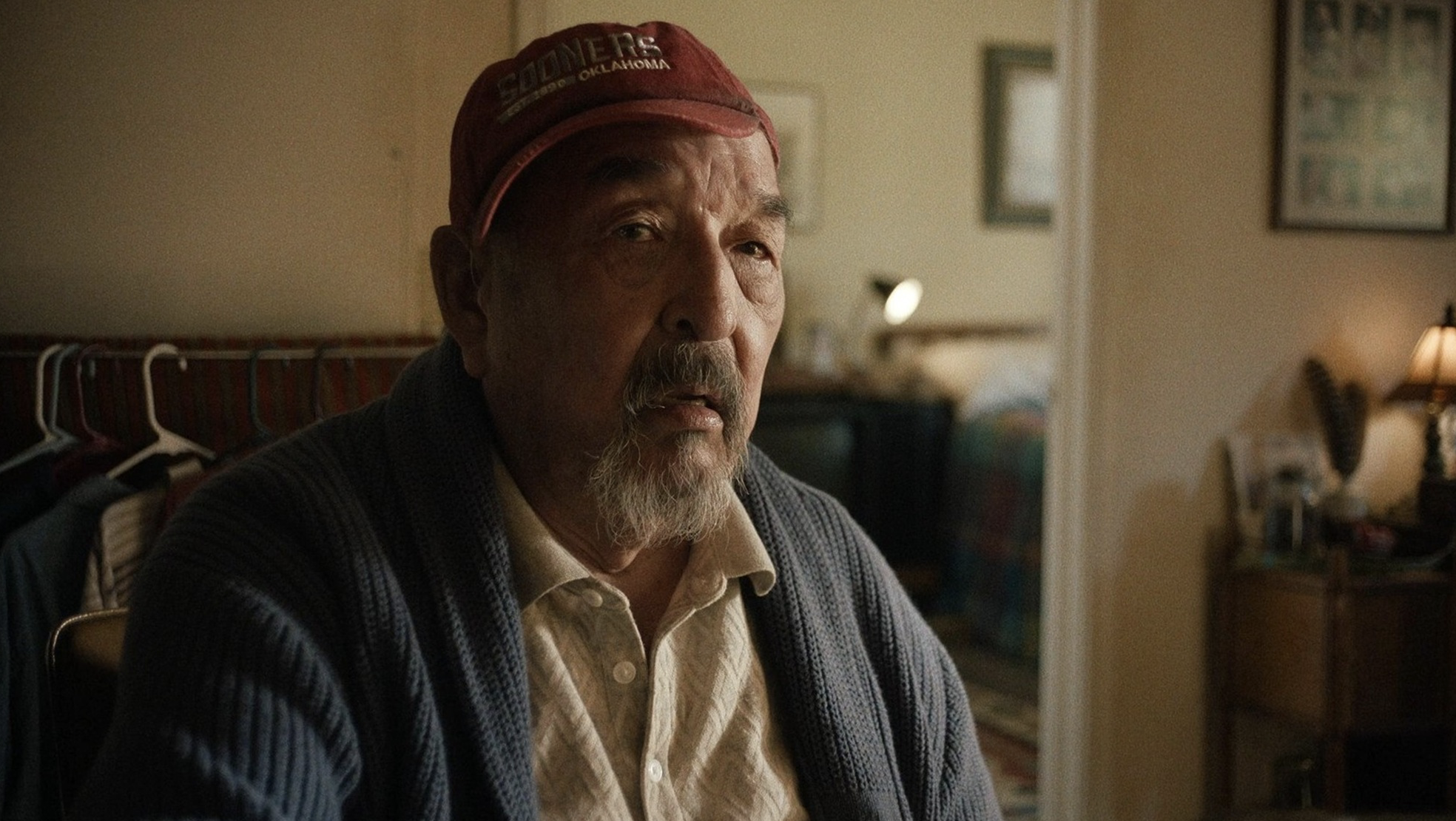
And I’d be remiss if I didn’t mention Graham Greene in his final performance. As usual and as always, it is stunning in its simplicity and directness. Almost painful, knowing it was his last, and Sterlin Harjo dedicates the episode, “Old Indian Trick,” as a tribute to him. It brought tears to my eyes.

With Reservation Dogs, and now The Lowdown, Sterlin Harjo wants us to know that Oklahoma isn’t flyover country. He asks us to delve deeply into Oklahoma’s history and nature, both the good and the bad, and recognize that Tulsa is a culturally rich, vibrant town, filled with humor, heart, and bittersweet longing. Oklahoma’s new state motto is, “Imagine That,” and in The Lowdown, Sterlin Hajo’s imagination does exactly that.


Comment

from The Bulwark, 04/10/2025: Nihilism at The White Lotus -- Season 3 Review

January 10, 2026

LET ME START OFF BY SAYING something positive: In the past, I have adored Mike White’s body of work. I consider Freaks and Geeks, Enlightened, Year of the Dog, Chuck and Buck, as well as the first two seasons of The White Lotus to be subtle, edgy, funny, nuanced, and thought-provoking. But as the credits rolled on the finale of The White Lotus’s third season (streaming on Max), I said out loud to my TV screen, “Are you f-ing kidding me?” I am legitimately confused—to the point of anger—by this entire season. I’m left to conclude that this series may have jumped the monkey.

So many monkeys, so little meaning. They are in almost every cutaway, lurking, watching behind the scenes on the hotel grounds, occasionally howling. I get it: I felt the same way watching this group of insufferable people interact with each other for eight episodes. Do the monkeys represent humans’ base animal instincts that we pretend don’t exist and try to conceal with education and material success? Do they stand for the menace lurking underneath the surface of this luxurious Thai hotel? Or are they just there so that Rick Hatchett (Walton Goggins) can tell his girlfriend Chelsea (Aimee Lou Wood) after he confronts the person he thinks ruined his life, “I finally have the monkey off my back”—a season-long pun in the making? Who knows? To me they seem more like another animal: a red herring. A red herring in a sea full of red herrings that just swim in circles.

For being a whodunit, season three of The White Lotus is almost devoid of action. Every other scene has a main character staring deeply into the middle distance as portentous kettle drums and discordant background music swell to make sure the audience knows these characters are battling with difficult life choices. Unlike the haunting soundtracks in seasons one and two, season three’s is melodramatic and unearned, more appropriate for an episode of Survivor (a reality show in which Mike White participated) than a season of prestige television.

And when there is dialogue, it’s irritatingly obvious and expositional. “We are soulmates, we are tied together forever,” Chelsea says over and over to Rick. “I’m going to help you get your joy back, even if it kills me,” she says at another point. Guess how that will turn out for them in the end!

Timothy (Jason Isaacs), the paterfamilias of the noxious Ratliff family, exclaims to the hotel manager straight off the boat, “[My daughter] is a religious studies major, so she’s writing her thesis—what’s your thesis on, Piper?—well, it’s on Buddhism, and there’s a monk and a monastery near here, anyway, she wants to interview him, so we made a family road trip of it.” Okay, thanks for laying all that out for us so neatly.

WHAT IS THE MESSAGE Mike White wants to tell about this particular hotel in this particular place? I honestly don’t know. What happens here could happen anywhere, and Thailand seems beside the point. In previous seasons, the locale was an implicit and explicit part of the story. The first season took place in Hawaii, where we felt the culture clash between native Hawaiians and the rich American tourists who disrespect their culture and use the island to suit their own pleasures. Sicily was the setting for season two, where the luxury of Taormina is a paper-thin veneer of civility over the seductive and perhaps sinister nature of that capricious island. The rich Americans vacationing there are seduced and abandoned, duped and unsettled by Sicilians, who take advantage of their guests’ naïveté and arrogance. And they reject the American notion of reconnecting with the mother country as a sort of reverse colonialism.

But aside from sumptuous shots of nature and the endless monkey cutaways, season three neglects Thailand’s allure and traditions. Rather than lush, mysterious, and spiritual, its setting feels claustrophobic. We rarely leave the grounds of the hotel. And when the characters do, what they experience of Thai culture is generic. The Thai actors themselves seem like placeholders instead of fully realized individuals. As the audience, we have no idea how the staff feels about their guests.


Fabian tells Rick and Chelsea that the wellness program at the White Lotus is “the best in the world,” and then aside from some therapy, massage, and yoga sessions, that idea goes by the wayside. What could have been a compelling examination of the wellness industry—its hopes and hypocrisies, the virtues and vices of its denizens—becomes another missed opportunity. Yes, we do get a brief glimpse of life in a Thai monastery, but the dialectical tension between spirituality and materialism is handled like a freshman 101 class in Buddhism. From the creator of Enlightenment, the lack of spiritual depth is one of the most mysterious and annoying aspects of this season of The White Lotus.

And this season’s nihilism is the other big frustration. I appreciate Mike White’s dark humor, irony, and even cynicism, and I never expect neat, happy endings from him—but I do expect complexity, compassion, and humanity. Season three’s casual cruelty caught me off guard. Carrie Coon’s character is put through the emotional wringer and is made to apologize and vaguely grovel to her two frenemies who treated her quite badly. Timothy almost poisons his entire family, yet one scene later he is on the departing boat, composed and recovered. Gaitok, the thoughtful, virtuous security guard goes against his gentle nature and chooses violence to advance in his career, thereby winning the hand of the superficial girl he pines for. Belinda (Natasha Rothwell), whose pain we felt viscerally in season one when Tanya dropped her as a business partner in the wellness practice they planned together, does the exact same thing to her Thai lover in season three, except he just accepts it with a warm smile as she leaves to go back to Hawaii, a new multimillionaire. We believed Belinda to have a spiritual and moral core, but psych! By Belinda taking Greg/Gary’s $5 million in hush money, Mike White apparently proves us wrong.

Yes, there are some very funny and cogent moments this season (as a Tar Heel, I certainly do appreciate all the explicit Duke hatred), but Mike White ultimately plays us for fools and suckers, and to me, this feels reductive and cheap for such a talented creator. He kind of dares us to loathe almost everyone, which I suppose is bold in its way, but I find it to be more contrary than clever in its execution. Few of the characters have significant emotional journeys, and we as an audience discover very little about them. It’s fitting that the song playing over the closing credits is Billy Preston’s “Nothing From Nothing (Leaves Nothing).” As an admirer, I just expect more from Mike White than a sour taste left in my mouth.


Comment

from The Bulwark, 07/29/2025: No Lyin' to Lyonne -- Poker Face, Season 2 Review

January 10, 2026

BOY, I DIDN’T KNOW EXACTLY HOW MUCH I needed the second season of Poker Face (which finished up its run on Peacock). Every episode is delightful, witty, and diverting, without ever glossing over the darker aspects of human nature. Like its patron saint, Lieutenant Columbo, Poker Face’s friendly, discombobulated heroine upholds her integrity in a world roiling with deception, jealousy, and greed. Her curiosity about people and her compassion are what suck her into sticky situations, but her innate commitment to truth and justice compels her to unearth the mystery each episode’s perpetrator tries to bury.

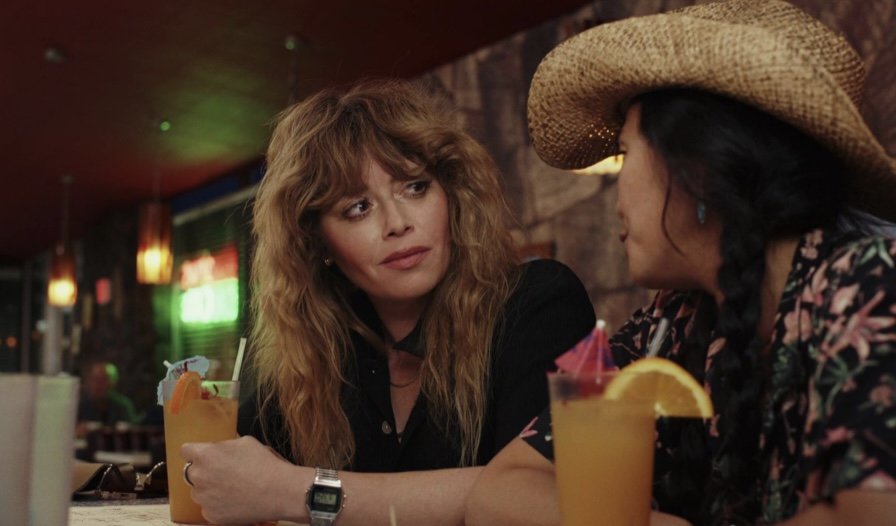
Natasha Lyonne plays Charlie Cale, whose eccentric, befuddled spirit belies an uncanny and laser-focused talent: the ability to tell without fail whether someone is lying. Charlie’s exclamation, “Bullshit!” is her version of Lt. Columbo’s, “Just one more thing. . .” Like Columbo, Poker Face is not a “whodunit” but a “howcatchem”: We see the murders occur before our protagonist appears on screen. But unlike Lt. Columbo, Charlie is outside the law, trying to remain under the radar as she runs away from both the mob and the FBI. Out of habit and necessity, Charlie is a loner with a quasi-vagabond existence, unperturbed and free from responsibility. Despite her lone-wolf ethos, Charlie is anything but a misanthrope. She is fascinated by human beings and their motivations. And since people are complicated, trouble has a way of finding her. As she travels from town to town across the United States, picking up odd jobs along the way, Charlie becomes entangled with tricky personalities and the messy relationships that come with them.

One of the many pleasures of this series is the work done by casting directors Mary Vernieu and Bret Howe (who also worked on the Knives Out! movies directed by Poker Face creator Rian Johnson). The guest stars are almost uniformly inspired choices. Much like Peter Falk did in Columbo, Lyonne has the generosity of spirit to let her costars, both well-known and unsung, shine in their own right. There are so many standout performances in this second season: Cynthia Erivo (playing five different characters in one episode), Gaby Hoffmann, Richard Kind, Kevin Corrigan, James Ransone, Sam Richardson, Corey Hawkins, Awkwafina, Method Man, Patti Harrison, Margo Martindale(!), Carol Kane(!!) and John Sayles(!!!), just to name a few.

My favorite episode also has my favorite acting. “The Sleazy Georgian,” guest-starring John Cho and Melanie Lynskey, plays like a piece of theater rather than a TV show. Minus establishing and closing shots, the episode takes place wholly inside—in a bar of a midlevel hotel and in one of the hotel rooms. Most of the scenes are two-handers and rely on dialogue rather than action. Normally in television, “see, don’t tell” reigns supreme, but in this particular case the intelligence and tension of the acting and Megan Amran’s writing was so masterful that I was entranced by the words alone. I feel deeply for Lynskey’s character, who desperately wants to escape the confines of her prescribed life, yearning for love and adventure. And when Lyonne matches wits with Cho, the TV set practically crackles. It’s a tour-de-force performance from Cho, a consistently versatile and brilliant actor who flies under many people’s radar. The delight of this episode is in its twists and turns so I don’t want to give anything away, but Cho has been gifted with a part that showcases his range, smarts, and subtlety.

Another standout episode involves a uniquely New York City issue: how someone will literally kill to live in a rent-controlled apartment (Alia Shawkat delivers a coup as the murderous tenant). Another involves a screenwriter’s life becoming the embodiment of the movie he reveres the most: Michael Mann’s Heat. And another features an intricate plot involving Justin Theroux as an infamous international hitman (or is he?). Theroux, with a huge assist from the episode’s expert writing and direction, is able to show off his acting chops and his physical grace. And I loved seeing Carol Kane on my TV screen again! She and Lyonne are perfectly matched technically and physically; in fact, with their shared eccentricities and masses of curls, they could be mother and daughter. What a delight.

It’s clear that both Lyonne and Johnson love actors of all stripes. Whether Lyonne is acting with a 77-year-old pro like Rhea Perlman (as the head of a mob syndicate) or a preternaturally talented 12-year-old like Eva Jade Halford (as a diabolical fourth grade star pupil), she gives each equal respect and weight. And although her portrayal of Charlie is full of quirks and mannerisms, her character is always grounded in reality, humor, and pathos. Charlie is a loner, yet she craves human connection. Even mid-season when she is (briefly) no longer on the run, she’s a restless, wandering soul. Each episode, she tries on for size another place and group of people, but because of fateful circumstances, none of them fit. She begins a romance that actually seems promising until her date ends up a murder victim. Her most consistent connection is with the disembodied voice of a long-haul trucker on her CB radio named Good Buddy (Steve Buscemi), who gives her life advice and lends her his apartment in Brooklyn since he’s hardly ever there. Like most mutant powers, her bullshit detector is both a blessing and a curse. It protects her, but it also keeps her from letting things lie and not becoming enmeshed in other people’s problems. The only person who consistently cares about Charlie’s wellbeing is Agent Luca Clark (Simon Helberg), but he can’t be a true friend since he’s been charged with bringing her into FBI custody. In NYC, she attempts to put down roots and rest awhile. She even starts forging a potential deep friendship/partnership. But Charlie isn’t suited to stability and stasis. Soon enough, she’s peripatetic, running from and toward danger again. Amiability and loneliness go hand-in-hand for Charlie, and it’s one of the reasons she’s such a compelling, sympathetic person.

Poker Face’s second season is a knockout in terms of execution. I could go on and on extolling the virtues of its cinematography, direction, editing, set and costume design, and music composition. But what I love just as much is its heart. It’s the perfect pairing of style and substance. When cruelty, lies, and avarice assault us on a daily basis, it’s a relief to escape into a TV show where the heroine calls bullshit on all of it. She cannot help being honest and caring about people. As hard as she tries to disengage, her essential compassion and good nature force her to fight against injustice and to help the helpless, even at her own expense. Charlie’s bright red hair is lit from behind in nighttime scenes, giving her a sort of neon halo. She’s the embodiment of Good Trouble. And even though it’s wish-fulfilment on my part, I relished watching Charlie’s empathy and truthfulness win the day again and again for these twelve episodes. It was a great antidote to real life.


Comment

Elena and Lina

Why ‘My Brilliant Friend’ Resonates Beyond Italy (from The Bulwark, January 13, 2025)

January 23, 2025

HOW IS IT THAT a person (me) born and raised in America could respond so viscerally to My Brilliant Friend, an Italian drama series (which recently wrapped its final season on HBO and streaming on Max) about the tortuous, lifelong relationship between two women raised in a suburb of Naples? We are all motivated by similar impulses: love, jealousy, hunger, hatred, success, and most of all, survival. Using Elena Ferrante’s quartet of Neapolitan novels as source material—and following them almost to the letter—creator Saverio Costanzo transforms an intensely personal saga into a universal story.

The series follows the friendship between Elena “Lenú” Greco and Raphaella “Lila” Cerullo (both played by multiple actresses) from their childhood in the 1950s through their old age in the 2010s. Lenú is fair-haired, studious, and observant. Lila is dark, wild, and impetuous. But both are drawn to each other because of their deep intelligence and imagination. Lenú marvels at Lila’s savagery and complete disregard for provincial mores, and Lila is attracted to Lenú’s reserve and grace.

Lenú and Lila as children

Although Naples is a train stop away, Lenú and Lila’s hometown holds none of its cultural treasures. The girls share and endlessly reread a dog-eared copy of Little Women, the town square is a dirt patch, and the individual fortunes of its citizens are controlled by two rival Camorra-adjacent families—the Carraccis and the Solaras—who rule the suburb through fear and intimidation. Considering their deprivation, the fact that an adult, Donato Sarratore, who works for the railway but also writes poetry, is able to move his family into the city proper seems like a beautiful but improbable dream to both girls. That fantasy of intellect triumphing over poverty and provincialism feeds into Lenú’s decades-long love for Sarratore’s handsome, reticent, bookish son, Nino.

The girls’ way out is education. But this is where their paths diverge. An elementary school teacher marvels at their fierce intellect and advocates for both to go to middle school, something very few children from the neighborhood manage to do. She convinces Lenú’s family, but not Lila’s. Lila works in her brutal father’s cobbler shop and then gets married at sixteen to one of the Carraccis to escape her family, while Lenú travels into the city of Naples and excels in her studies.

This is where the rivalry between Lenú and Lila truly begins. While on one level she understands Lenú’s need to leave town to continue her education, Lila also resents that she doesn’t have a similar opportunity. So she continually draws Lenú close (at one point, Lila, who has married into money, buys Lenú the books she’ll need but cannot afford to continue her education), and then pushes her away (Lila then calls Lenú pretentious for speaking proper Italian instead of the Neapolitan dialect). Lila tells Lenú she must succeed for the both of them, but then taunts her when Lenú achieves just that. It’s the underlying reason Lila has an affair with the intellectual Nino one summer in their twenties, even though she knows Lenú pines for him. Not only can she mine his academic brain, she can punish Lenú for leaving her behind.

when Lila betrays Lenú with Nino

Lila is Lenú’s id, and Lenú is Lila’s superego, but neither knows how to communicate and bond in a healthy way. They care intensely and depend on the other to the point of obsession, but they also sometimes behave terribly toward each other and those closest to them. Lenú is addicted to their mercurial friendship, and compares herself relentlessly to Lila’s fierce power and beauty, always finding herself lacking. Even though she excels in school and others describe her as exceptional, who is the real brilliant friend? Lenú believes Lila, though uneducated, has the innate brilliance that escapes her. She convinces herself she would be ordinary without Lila’s influence. Even when she becomes a successful writer, Lenú feels insecure and indebted to Lila because all her books are inspired by Lila’s life. Lila is alternately cruel or affectionate depending on her moods and needs, and Lenú suppresses her anger, sometimes distancing herself from Lila, but usually being a passive, dutiful friend while secretly wishing her ill. And then when misfortunes befall Lila, Lenú feels immeasurably guilty, as if she conjured them into reality.

I HAVE RARELY SEEN a female friendship depicted on film with such unvarnished honesty and nuance. It doesn’t matter if you live in an Italian village in the 1950s or present-day America, every woman I know has had similarly complicated feelings about a close female friend. We still live in a patriarchal society where we are taught that in order to be “nice,” we should suppress our desires. And because opportunities are more limited for women than they are for men, and finding the “right” husband is a female goal, we are trained from an early age to be each other’s rivals. We are tacitly told that there is only so much good fortune to go around and if one woman has it, it depletes another’s, that happiness is a zero-sum game. Because Lila is charismatic and scorns small-town thinking, the girls she grows up with feel threatened. They are jealous when Lila becomes prosperous, and smug when her fortune plummets. And Lenú’s female teachers and mentors are supportive when they view her as dependent, but become hostile when they perceive their young ward is surpassing them in status and influence.

Lila’s ferocity is compelling but frightening to Lenú because that impulse burns secretly inside her too. Lenú becomes a published author and a respectable, bourgeois wife through politeness and obedience. Everyone compliments her “goodness,” and it’s what has afforded her success at school and in life, marrying into an elite, intellectual family. However, because she tamps down her needs in order to appear unselfish and faithful, and has developed herself exclusively through words while pushing away her feelings, she inevitably blows up her marriage by leaving her family for the insatiable Nino.

Lenú and Lila’s complicated relationship with motherhood is also relatable. Lila wants nothing more than to devote all her energy to raising her son but is forced to work a factory job to survive. Her son is affected emotionally, and she feels culpable for his future shortcomings. After publishing her first novel, Lenú, though attentive to her children and workaholic husband, is isolated, exhausted and lonely in motherhood. She feels thwarted in her ambitions, angry at her husband, and longs for intellectual and social stimuli.

I felt both women’s predicaments intensely. Whether working or not working, mothers then and now are pulled apart psychologically, never feeling adequately committed to either their desires for personal fulfillment or their responsibilities to their families.

Even though I winced at some of Lila’s and Lenú’s actions and hoped they would make better decisions, I recognized the truthfulness of their behavior. More painfully, I recognized my own flawed behavior in them. As a woman, I have fallen into the trap of equating goodness with niceness, being a passive people-pleaser rather than being honest and direct with myself and others about what I really needed, exacerbating my own resentment. And like Lila and Lenú, I have been so caught up in the fantasy of certain men, what they represent rather than who they actually are, that I have sacrificed myself and what I know to be right to satisfy them. When I saw the way Nino charmed and wheedled his way into Lila’s and Lenú’s hearts because he needed to be wanted by as many women as possible to feel alive, I recognized with a shock that I am embarrassingly familiar with that kind of man.

Within an intimately personal story about two specific girls moving through life, My Brilliant Friend excavates so many universal themes: the limits of feminism, the extent of generational trauma, how youthful idealism transitions into middle-age compromise, the toxicity of capitalism, the conflict between intellect and common sense, and the virulence of violence. Even if I never step foot in that Neapolitan suburb, I’ll feel a lifelong connection to Lila, Lenú, and all the other characters I watched for four seasons. I empathize with their struggles, I recognize their failings and their successes, and I understand what motivates them, because it’s what motivates me and people I know. If I judge them, I am also judging myself. We can’t always be ideal sisters to each other like the girls Lenú and Lila adore in Little Women, but My Brilliant Friend allows me to acknowledge my shortcomings and hopefully become more straightforward, honest, and true to myself so I can be a better friend to women in my own life.

Comment

Katja Herbers, Aasif Mandvi and Mike Colter in EVIL

'Evil' Comes to an End (from THE BULWARK, 09/20/2024)

November 16, 2024

THE FIRST THREE SEASONS OF EVIL were inventive, entertaining, and devilishly fun, which makes it all the more disappointing that its fourth and final season ended with a whimper and not a demonic howl. Even though the acting and production design remained consistently excellent, the show’s captivating tension, compelling characters, and intricate plotlines fizzled in the end. 

A priest, a forensic psychologist, and a tech specialist (no, this isn’t the setup to a joke) are Evil’s protagonists. David Acosta, Dr. Kristen Bouchard, and Ben Shakir (Mike Colter, Katja Herbers, and Aasif Mandvi, respectively) are contracted by the Catholic Church to investigate whether cases of demonic possession are real, fraudulent, or have scientific explanations; think the In X-Celsis Deo-Files. Created by husband and wife team Robert and Michelle King (who also created The Good Wife and its spinoff, The Good Fight), each episode of Evil examines a new, discrete case while also delving into the main characters’ personal lives, the developing relationship among them, and the machinations of the series’ supervillain, Leland Townsend (Michael Emerson), another forensic psychologist who has diabolical global domination via cyberspace on his bucket list.

Evil’s writers masterfully blended horror with humor, the supernatural with the every day, science with religion, and heart with smarts. Even though David, Kristen, and Ben dealt with increasingly bizarre situations, their characters rang true to life. The interpersonal relationships are touching and complex and kept Evil plausible despite its paranormal underpinnings. We feel Kristen and David’s deep but forbidden love for each other. We see David struggle with his religious faith, Ben with his scientific skepticism, and Kristen with her moral code. We relate to Kristen’s knotty relationship with her mom, Sheryl (the always spectacular Christine Lhati), and her horror as she becomes increasingly entangled with Leland. We are repelled by Leland’s motivations, but recognize his perverted intelligence and twisted sense of humor thanks to Michael Emerson’s bravura performance. And we sympathize with Kristen and Ben’s insistence on explaining away incomprehensible occurrences with rational, scientific explanations. In the Age of Trump, where there is no bottom, desperately hoping that common sense, heart, and justice win over irrationality, hatred, and chaos makes complete sense to me. 

As with every show the Kings produce, Evil is a class act. The casting is impeccable: From series regulars to guest stars to even one-line roles, everyone was top-notch. The Kings took full advantage of filming in New York City by populating the show with brilliant New York theater actors (John Glover, Brian Stokes Mitchell, Jeremy Shamos, Jayne Houdyshell, Brian D’Arcy James, Patrick Breen, and Denis O’Hare, to name just a few). These actors have real faces full of character and know implicitly how to play a scene with integrity and theatrical awareness, which is crucial in horror where the stakes are so heightened.

Evil’s production design also has a theatrical flair. Sharp angles of light at night create deep shadows where terrifying creatures can lurk. The camera often gazes up, sometimes making the audience feel small and powerless, and sometimes directing our eyes heavenward, as one looks up at a stained-glass window in a cathedral. 

Kristen lives in a crowded two-bedroom house in Queens with her four daughters and a peripatetic mountain-climbing husband. The living room ceiling decorated with cut-out stars is undoubtedly a shared mother-daughter crafting project. The house is cluttered and redolent of happy chaos, full of life. However, it sits under an elevated train line so when trains pass, their rattling and reverberations shake the home and everyone inside, presaging something dark that might befall this family. In contrast, Leland’s grand Park Avenue apartment is luxurious but cold. It’s a place designed to impress and intimidate, to signal the wealth, sophistication and power of its owner (and to keep hidden his former life as an insurance adjuster in Des Moines). 

THROUGH THE FIRST THREE SEASONS, the Kings blended horror and humor seamlessly and elegantly. The scares were genuine, but so were the laughs. The various Satanic ambassadors who haunt, taunt, and wreak havoc on characters’ lives have real verve for their jobs, and they play their nihilistic humor to the hilt. The writers often give these fantastical creatures human, ordinary names, like George, Norm, and Abbey, while giving the main ghouls in charge no name. For example, the demon tasked with bringing about the emergence of Satan into the world is named the “Manager.” The show treats the Apocalypse as an end-of-year item to be ticked off a corporate to-do list. In fact, the Manager works for a company called DF (“Dark Father”), with a board made up of demons disguised as white, middle-aged, besuited businessmen. When Sheryl joins DF, working for the Devil is less upsetting than realizing she has no chance of ever advancing in the company, and neither does any other woman in the office. Over her desk, there is a literal glass ceiling. Evil makes the perfect dark observation: In Satanism as in the supposedly beatific entity of the Catholic Church, women are similarly thwarted by the patriarchy.

Evil handled weighty subject matter with dexterity, sensitivity, and smarts. As befitting its title, the show explores the concept of evil in its various forms: racism, misogyny, sociopathy, genocide, man-made environmental collapse, soulless tech overlords exploiting the vulnerabilities of their consumers, the rage of lonely online incels, capitalist greed, cannibalism, and even the sins of the Catholic Church (a brave move considering the Kings are devout Catholics). It consistently takes chances, defies expectations, and produces real pathos and terror. It was appointment television for me and my 16-year-old, and several times we both responded out loud to its cliffhanger endings with an appreciative “Whoa. . .”

“George”

Sadly, despite a couple of excellent episodes (“How to Survive a Storm” and “How to Dance in Three Easy Steps”), Evil lost its way in its final season. It becomes occasionally melodramatic and plodding, focusing more on the protagonists’ emotional dilemmas and less on adventurous horror. Perhaps it had to do too much in too short a time, given the unfortunate cancelation notice. But beloved characters are dropped unceremoniously, there are gaping plot holes, and unnecessary storylines are added that make the last four episodes muddled and unsatisfying. Spoilers, and complaints, ahead: Kristen gets over Andy’s betrayal with unnatural speed. After the cliffhanger at the end of season two, nothing happens between her and David, a missed opportunity. What happens to Ben’s migraines and Jinn apparitions when he removes his tinfoil hat? Why is Dr. Boggs surprised to see demons with Sheryl when he invited them into his life to cure his earlier writers’ block? What happened to Lexis’s tail and potential demon status from season one? The show became a tad too religiously tinged for my taste, and there are many red herrings. They abandon the wonderful trope of having a grim pop-up book introducing the demonic dilemma of each episode. They even truncated Evil’s brilliant theme song by David Buckley, which takes away from the music’s dramatic crescendo and so the resolve in its final flourish is less satisfying. This sums up how I feel about the fourth season in general. Instead of offering closure, Evil’s finale felt artificial and pat. 

Still, three brilliant seasons out of four is an embarrassment of riches, and I appreciate Evil’s nerve, style, and moxie. The show pushed the boundaries of what psychological horror could be on network television (though the show migrated from CBS to Paramount+ after the first season). It counterbalanced serious social issues with wit, and thrived in the expert pacing of its directors and its cast. How do we find hope when despair seems to be closing in around us? How do we navigate a world where technology and dark forces are so intricately entwined; where evil lurks in the iCloud? According to Evil, you hire a priest, a psychologist and a technology specialist to save you, and in the process, they save themselves, too! Despite my disappointment that the finale didn’t stick the landing, Evil manages an impressive balancing act: science, faith, and technology can work in harmony to solve terrifying mysteries while showing its audience a sinfully good time.


Comment

‘Oldboy’ and the Art of Preparing Your Audience for the Unexpected

December 02, 2023

I TRY TO GO TO MOVIES basking in complete ignorance. Unless I’ve seen the previews of coming attractions, I know nothing. I don’t look at reviews, I don’t Google, I avoid chatter on what I’m about to see. As much as possible, I like to come into a theater fresh, with no expectations. So when a friend convinced me to go to a late-night screening of a twentieth-anniversary rerelease of Oldboy (2003), I took her up on it solely because she has great taste in movies. I didn’t even know it was Korean. As we sat down in our plush, cushy movie seats, my friend said, “Buckle up, Zandy.”

Before the movie began, there was a special introduction by Park Chan-wook, the co-writer/director, to mark its anniversary. Park had this to say to the audience:

“I would like to give some advice to those who are watching Oldboy. First, there are scenes of extreme violence. Brace yourselves. The movie grapples with themes such as revenge, betrayal and sadness. There’s no avoiding any of this. Second, be prepared for extreme nudity, but not the kind of nudity you’d expect. Things are not always as they seem. There are many funny and ironic moments in this film. Don’t hesitate to laugh. If there are people who love octopi, this film may not be for you. Whether you have seen Oldboy before or if this is your first time watching it, I hope you all enjoy the film.”

How does Park Chan-wook’s prescreen trigger warning compare to this screenshot that The Bulwark’s Sonny Bunch posted on Twitter?


Well, the latter is asinine. It insults the audience’s intelligence and perhaps if you’re so easily perturbed, you should avoid horror movies altogether. It is perfunctory and pro forma, neither informing the audience of what’s to come nor preparing them for the context of what they’re about to see. This sort of infantilization feels like something a corporate drone dreamed up somewhere in the bowels of Amazon to make it look as though they’re proactively trying to avoid needless controversy on social media. Contrast that to Park’s caveat, which ultimately increased and deepened my appreciation for and admiration of Oldboy.

Because it was my first time seeing Oldboy and I knew nothing, I laughed at his warning, thinking this avuncular gentleman in his sixties with a kind, intelligent face was being satirical. “Extreme nudity”? “Octopi death”?? How random. Maybe this is a comedy? He told us to laugh, after all.

But when I witnessed a wild, unkempt, and desperate Oh Dae-su (Choi Min-sik) say to the angelic-looking sushi chef, Mi-do (Kang Hye-jeong), “I said I want to eat something alive,” and then proceed to devour a large, wriggling, very much living octopus, I realized, “Oh my god. The director was being literal!” Immediately afterwards, my perception of the movie shifted in a way that was shocking, even vertiginous. And amazingly, Oldboy continued to stun and disquiet, one-upping itself until the cataclysmic penultimate scene when Lee Woo-jin (Yoo Ji-tae) reveals Dae-su has unwittingly taken his own daughter as his lover, Dae-su then cuts off his own tongue, and, satiated in his vengeance, Woo-jin shoots himself in the head.

But something else that Park Chan-wook said was also true: Oldboy IS funny. When Oh Dae-su finds an extra chopstick with his daily prison rations, the one he uses as a tool to try to escape his fifteen-year confinement, he says, “All I could think about in that moment was the guy in the next room was eating with only one chopstick.” The ease with which the movie slid from humor to horror is unsettling, rolling beneath me like an earthquake. It is both playful and raw: about love and affection but also incest, retribution, and violence. A film about a flawed, unremarkable man who because of circumstances beyond his control transforms over fifteen years into a beast whose sole purpose is his epic quest of revenge. As I left the movie late at night, I wasn’t even sure I liked it. It was brutal and unforgiving, and it used the women in the film more as plot devices and symbols than as full-fledged human beings. But after I found my car in the nearly empty parking lot and drove home on deserted streets, I felt like I was in a different state than when I entered the theater.

It was very similar to what I felt after my first time seeing Mulholland Drive: suddenly everything around me seemed sinister. None of us was due a happy ending. A dark, mysterious force that controlled our collective destinies was lurking in the shadows. Both movies infected me, and the more I thought about them, the more they deepened and revealed their brilliance and audaciousness. I had a hard time sleeping. Underneath the brutality, there was a deceptive delicacy and a grace to both Park Chan-wook’s and David Lynch’s direction. These writer-directors have a similar deep understanding of humanity and our angelic and demonic sides: our lyricism and our ugliness, our curiosity and our brittleness, our strength and our fragility. And both men use humor in an off-kilter way to destabilize their audience and keep them on their toes. Their cameras thrive in the darkness.

In retrospect, I saw Park Chan-wook’s intro as less of a warning and more of a compassionate preparation for Oldboy. Rather than the movie being violent and prurient to shock (which I found Spike Lee’s 2013 remake to be), Park lets us know that the brutality is for a grander purpose: to dissociate the viewers from our normal lives outside the theater and take us to a heightened, more mythic and animalistic world. The extreme violence and the ultimate taboo of incest, along with the saturated, stylized cinematography, make the story biblical, so that it stands for something awesome: the savagery that lies underneath our manufactured, daily civility. How gossip—something we all do—can curse a man for life. As Oh Dea-su’s tormenter says, “Be it a rock or a grain of sand, in water they sink the same.” The ordinary can have extraordinary consequences. I’m glad Park Chan-wook primed me for his movie. After my initial bewilderment, I woke up the next morning remembering what he said and realized that it actually was an act of generosity and empathy. Things are not always as they seem.

Comment
Ryan Gosling in "Drive"

Ryan Gosling: A Professional

December 02, 2023

MY MOM BELIEVED THE HIGHEST COMPLIMENT she could give when she saw me onstage or on film was to call me “professional.” Granted, she was British and not given to florid praise, but her definition of professional didn’t mean “competent.” It meant you were a worker. You knew your lines, you knew your marks, you showed up on time, you were respectful to your director, writer, cast, and crew, and you were tirelessly devoted to your craft. So when you performed in front of an audience, you made all that effort look effortless.

When I watch Ryan Gosling, that’s what I see: a professional.

He began his career in show business at age 12 as a dancer. Dancers have to rehearse laboriously in order to memorize the choreography and not hurt themselves or their partners, but in performance they have to let all the work go and feel the emotion flow through their body. Ryan Gosling inhabits his roles as if he were dancing, not acting. There’s a freedom and grace to him that I know comes from intense study and discipline, but I cannot see that work at all on screen.

“Crazy Stupid Love”

He is serious about his rehearsal process. Gosling studied piano three hours a day for three months in preparation to play a jazz pianist in La La Land (2016). He and Michelle Williams lived together in Pennsylvania on a tight household budget filming Blue Valentine (2010) so they could authentically play a young, struggling couple. During the filming of Drive (2011), Gosling took apart and then put back together the 1973 Chevy Malibu he drove in the movie. He got his broker’s license before filming The Big Short (2015). For The Believer (2001), Mormon-raised Gosling studied Hebrew and the Torah for months in order to play an Orthodox Jew who rejected his faith and became a Nazi. Yet despite this level of intensity, there are no stories about him of prima donna behavior during filming. He has his process but is never showy or demanding. None of his performances scream, “Look at me! Look at how hard I’m working! I’m IMPRESSIVE, aren’t I? Where’s my Oscar?” There is no fanfare, no drama, no attention-seeking, and no toxic on-set, “genius-at-work” behavior. He puts his head down, studies, collaborates, and does his job.

Nowhere is that more obvious than in his comedic roles, particularly The Nice Guys (2016). His “buddy-buddy” cop dynamic with Russell Crowe is easy and delightful. Their relaxed repartee is inspired, rivaling Robert De Niro and Charles Grodin’s in Midnight Run. They are two masters of their craft, collaborating generously and enjoying the hell out of each other, working off their opposing rhythms to perfection. Gosling is light and loose, and Crowe is muscular and heavy—a greyhound accidentally paired with a grizzly bear. Gosling plays self-destructive, alcoholic Holland March with breezy, nihilistic irony. He spends most of the movie hurting himself or getting hurt but miraculously not dying, his alcoholism literally and figuratively filling his body with liquid looseness that makes him virtually indestructible. Crowe’s Jackson Healy, even though he beats up people for a living, is more ethical, trudging through his violent assignments with heavy, grim determination. Their diametrically opposed physicality but similarly bleak outlook on life are what give The Nice Guys its congenial and gratifying flow. Together, they perform a kind of jazz-tinged funk, much like the music of Earth, Wind & Fire, which is featured prominently in the movie.

Ryan Gosling and Russell Crowe in “The Nice Guys”

Gosling even brings a sense of humor to his most intensely dramatic roles. In Blue Valentine’s early courtship scenes, Dean makes Cindy (Michelle Williams) dance while he accompanies her on his ukulele and sings “You Always Hurt the One You Love” in a goofy Elvis voice, showing the playful nature that originally attracted her to him. In Half Nelson (2006), a movie about a teacher ravaged by a self-destructive drug addiction, Gosling makes sure we see the devotion and respect he has for his inner-city students by the delicate way he teases and relates to them, joking around in class and gently mocking himself as their designated white authority figure. Even in a sentimental movie like The Notebook (2004)—at which, despite my best efforts, I did weep like a baby—Gosling imbues his character, Noah, with humor and pathos that in a lesser actor’s hands could cross the line into hokum. He and Rachel McAdams have such beautiful, high-spirited chemistry that they lift the movie far above treacly, tearjerker status and make it into something with earned emotional heft.

“Half Nelson”

It’s rare that an actor who is as good-looking as Ryan Gosling has such humility. Despite the effort he obviously puts into maintaining his Apollonian physique, there is no vanity to him. In Blue Valentine, he morphs from an optimistic, Brooklyn free spirit into a lost alcoholic with thinning hair and a slight paunch. In Lars and the Real Girl (2007), he taps into Lars’s trauma from his mother’s death and his father’s subsequent emotional abandonment, becoming a young man who despite being nice-looking, hardly speaks, is full of ticks, and who hides his body in layers of clothes so nobody, particularly non-rubber women, will touch him. In Half Nelson, he loses all the brawn he had in The Notebook to play a skinny, pale addict. He even makes fun of his physical perfection and heartthrob status in Crazy, Stupid, Love (2011), when Emma Stone’s character, on her quest to be seduced by “the hot guy that hit on me at the bar,” tells him to take off his shirt and he squirms as she ogles him: “Seriously?? It’s like you’re photoshopped!”

WHICH BRINGS US to Gosling as “Ken” in the mega-hit Barbie. For my money (sorry fellow feminists), Ken is the fount of humor in this cultural phenomenon. Through Gosling’s grace, charm, and comedic gifts, he manages to transform an almost two-dimensional character into the heartbeat of the movie. He is willing to be self-deprecating and use his physical perfection to play a doll whose sole concern is surface looks, and is plagued by insecurity when he doesn’t get the attention and adoration he thinks he deserves. He is a cautionary tale for dim, aggrieved men who believe they are owed respect by their mere existence. And he plays this entitled incel himbo to the hilt and wrings every drop of humor he can out of the part. In this female-dominated, explicitly feminist (some might say didactic, but that’s for another article) movie, he is happy to make himself the butt of the joke. And although he is game to play second-fiddle to Margot Robbie, America Ferrara, and of course, the director, Greta Gerwig, he has such verve and generosity of spirit that he ends up being the movie’s most memorable character.

“Barbie”

His compelling choice of projects, his willingness to invest himself fully, his lack of ego, his listening ability, his sense of humor, his work ethic, and his interest in, above all, serving the script dramaturgically (tip of the hat to Jeremy Strong), are what set Ryan Gosling apart from most of his fellow male actors. For thirty years, through intense discipline, he has focused on being an actor rather than being a movie star, which is why he can meld and disappear into whatever role he takes on. The range of his talent is extraordinary. And, like a true pro, he makes it all look so easy.

2 Comments
Tom Cruise in Risky Business

‘Risky Business’ Forty Years Later: The Movie That Made Tom Cruise "Tom Cruise."

December 02, 2023

I WAS OBSESSED WITH RISKY BUSINESS in the summer of 1983; I even bought a pair of Ray-Bans after my third viewing. Rewatching it forty years later, however, I’m struck by what a clever, dark, strange, and quietly subversive movie it is, a cut above other sex comedies of that era. And I found it fascinating to revisit Tom Cruise at the beginning of his career: to see the intimations of his meteoric rise to superstar status, yes, but also to see him acting a role I’m not sure he’d sign up for now.

Cruise plays Joel Goodsen, a regular, all-American high school senior from a wealthy Chicago suburb. He is neither a standout student nor a rebellious misfit. He is the dutiful, only son to his chilly and exacting parents. They expect him to excel, matriculate at an Ivy (preferably Princeton, where Joel’s dad is an alumnus), get a job in finance, marry an acceptable woman, and eventually become exactly like them. His life is mapped out for him.

My favorite Tom Cruise performances have been in roles where he had directors whom he admired and submitted to—auteurs like Stanley Kubrick, Martin Scorsese, Barry Levinson, Cameron Crowe, and Paul Thomas Anderson. With these directors, he relaxed his tight grip on his image and allowed them to take him on a dark journey of self-discovery. As wonderfully entertaining and technically impressive as Tom Cruise’s action-adventure movies are, those parts aren’t exactly complex character studies. Risky Business was Cruise’s first starring role in that brief period before he became “Tom Cruise.” And Paul Brickman, its writer and director, pushed him into tricky emotional territory. He brings out both Cruise’s vulnerability and maybe unearths a bit of his innate insanity. He pushes him to lose control. He gets Tom Cruise to have sex on a train and lip sync and dance with abandon in his tighty-whities, for God’s sake. (And manically bounce up and down on his parents’ overstuffed couch, foreshadowing his meltdown on Oprah twenty-two years later.)

rehearsing for his future Oprah Winfrey interview

Cruise plays Joel as a distinctly average kid. He is good-looking, but has no idea how to take advantage of it. He has recurring dreams where potential sexual encounters with imaginary girls are thwarted by missed tests, parental disappointment, and public embarrassment. He joins the school’s Future Enterprisers club to please his father and to look good on paper for college applications even though he struggles to find a product he has any passion for and can market successfully. He has a goofy laugh, he walks stiffly, and awkwardly stuffs his hands in his pockets. Joel isn’t comfortable in his own skin and doesn’t have a clue who he is or who he wants to be.

The current, carefully curated Tom Cruise would never take on a movie whose most quoted line is, “Sometimes you gotta say, ‘What the fuck?’” Watching Risky Business back when I was a teenager, I was thrilled by its sensuality. However, now I realize it is less about sex and more about the seductive, dark allure of capitalism, made flesh in the form of Lana (a perfectly calibrated and mysterious Rebecca De Mornay), a call girl Joel hires for the night. Lana deliberately makes herself into a symbol. We don’t know her last name, we barely know a thing about her private life, which is the way she wants to keep it. She wakes Joel up from a deep sleep and they have sex in the middle of a sudden windstorm. Is she real or just another one of his fantasies? As Jackie, the transgender prostitute Joel’s friend originally hired for him says of Lana, “It’s what you want. It’s what every boy off the Lake wants.” She looks like the girl next door, if the girl next door were a sex doll.

But she’s also a brilliant businessperson. Lana convinces Joel to turn his parents’ house into a one-night brothel servicing the other sad, little rich boys from Glencoe. Out of financial desperation, Joel agrees, but he takes to the part of a pimp with a heart of gold like a duck to the waters of Lake Michigan. He’s actually great at it. Lana has unearthed the entrepreneurial spirit he’d been missing in the classroom. In one weekend, Joel metamorphizes from a law-abiding, “good” son into a stone-cold movie star, sunglasses covering his eyes and thousands of dollars in his pocket.

Rebecca De Mornay and Tom Cruise

Risky Business dabbles in the tropes of the classic 1980s teenage sex comedy, but it is far more complex, nuanced, and slippery in its morals and in its tone. It has more in common with The Graduate than Porky’s. Most of the movie takes place at night and the cinematography reflects that darkness. The haunting soundtrack by Tangerine Dream adds a vaguely ominous, moody undercurrent. When Joel is waiting for Jackie and then Lana to arrive at his house, Brickman amps up the tension so high, we almost feel like we’re watching a horror movie. None of Joel’s buddies is particularly appealing or good friends to him. And his parents are rigid and unloving. His mom seems to care more about her Steuben glass egg than her son. Joel is very much on his own until Lana comes into his life.

Unlike the female roles in most 1980s comedies, Lana is never a passive figure there to serve the male lead. She may not have the advantages and education Joel has, but she’s miles ahead of him in every respect except wealth. When Joel unintentionally condescends toward her in an effort to get to know her better, Lana lets him know he’s a hypocrite for judging her and what she does to survive when, after all, he’s benefiting from it and lives off his parents’ largesse. And when it suits her, Lana lets Joel believe he’s her knight in shining armor, but she is always running the show. And even though she robs him blind, Joel ends up respecting Lana’s hustle and drive. She’s made “Sometimes you gotta say, ‘What the fuck?’” come to life for him.

Joel gets into Princeton not because of his grades or his legacy advantages, but because the admissions officer has had the time of his life at Lana and Joel’s pop-up brothel. While other students at the Future Enterprisers Club are presenting their paper towel holders and decorative planters that earned them $800 in sales, Lana has shown Joel how to make $8,000 in one night ($25,000 in 2023 dollars). In the penultimate scene, Lana and Joel have dinner together in a tony restaurant downtown, entirely populated—except for them—by rich, old, white men. When Joel asks her if what they had was just a setup, she tells him no, and then asks, “You don’t trust me, do you?” He doesn’t answer.

The last scene is them walking in the dark by the lake. Lana is dressed in a prim, white dress with a bow tied around her neck. Except she’s braless and her breasts are clearly visible under the dress. Joel doesn’t care. He not only accepts her, he revels in her daring. No judgments this time. They are on equal footing. She has given him confidence and purpose in a way his sheltered life at home and at school never could have accomplished. Will their romance continue? We don’t know, but for right now they both have profited from their pragmatic and symbiotic relationship. What an elegantly cynical ending.


Comment

Natasha Lyonne vs MAGA dog

Poker Face takes viewers back to the 1970s, temperamentally, every Thursday.

December 02, 2023

My dad liked company on the couch while he watched his favorite television shows, so at a very early age I was watching Kojak, The Rockford Files, and, if we were lucky, Columbo. In fact, my dad got in trouble with my first grade teacher, Miss Roberts, when she found out the reason I was falling asleep on my school desk was because I was staying up until 11 p.m. to watch these rather-inappropriate-for-a-six-year-old TV shows with my father. Naturally, he charmed his way out of the doghouse, and he and Miss Roberts ended up becoming friends.

The point of this story is that those wonderful ’70s procedurals—with their charismatic, ironical lead actors, and their brilliant guest stars and masterful writing and direction—bathe me in a warm, nostalgic glow. And as I viewed the first six episodes of Poker Face(streaming on Peacock), I experienced the same feelings of delight and enchantment.

I am certainly not the first to say how much Poker Face reminds me of Columbo. Both shows spend the first third of their episodes without their leads, showing the audience exactly who the murderer is and how they did it; a “howcatchem” rather than a “whodunit.” When Peter Falk, as the titular lead of Columbo, and Natasha Lyonne, as Charlie Cale in Poker Face, finally do appear, they are disheveled and distracted, lulling the suspects into a false sense of complacency. All the criminals think they’re different and special and can outsmart Columbo and Charlie, but their hubris is always their fatal flaw. And it’s a pleasure to watch the clever cat-and-mouse game play out every time.

Also similar to ’70s procedurals is the stellar quality of Poker Face’s guest stars: Adrian Brody, Benjamin Bratt, Judith Light, S. Epatha Merkerson, Ellen Barkin, Tim Blake Nelson, Tim Meadows and Chloé Sevigny, just to name a few. I made sure I knew nothing about each episode before I saw them, so I let out a joyful, surprised yelp as these actors popped up on screen, each one doing a spectacular star turn. Even though Natasha Lyonne is both the star and one of the producers (along with creator, Rian Johnson), she is magnanimous about letting her guest stars shine in their own right. Her chemistry with them, as well as with the wonderful lesser-known actors who populate each episode, is authentic and dazzling.

Even the graphics in the beginning credits and the jangly theme music for Poker Face are evocative of ’70s murder-of-the-week shows. As is the direction. The choice to let the action in the beginning of the episodes take its time to play out in long shots, with a relaxed pace, gives the audience a chance to savor the ambience, the setting and the subtle shift in various characters’ thoughts. This is particularly true in the appropriately titled episode, “The Stall.”

The premiere episode (“Dead Man’s Hand”) establishes why Charlie is on the run, and why in each subsequent episode Charlie takes low-level jobs in various small, lonely towns across America. Aside from the same pursuer trailing Charlie, so far each episode is a discrete story unto itself, and the audience could watch them in any order. Unlike virtually every other modern series, character development isn’t as important as the plot. Even though Charlie is the star, she is often not the focal point. In “Exit Stage Death,” she isn’t even the person who solves the murder. Poker Face is less about its lead, and more about the weirdos she meets along the way.

Which is not to say that Charlie is a nondescript wallflower. Natasha Lyonne crafts a unique, strong-willed, brave, and indelible character. Unlike Lieutenant Columbo, Charlie has no power. She has no authority and no weapons to protect herself other than her preternatural ability to know when people are lying. Also unlike Columbo, she has no artifice. She’s not pretending to be messy and discombobulated, she just is. She drinks too much, she smokes, she’s flustered, she’s a misfit. She’s friendly but doesn’t stick around anywhere long enough to make friends. She calls the murderers on their lies as soon as she hears them, and spends the rest of the episode doggedly determined to make sure the criminals are brought to justice. There is no, “Oh, just one more thing…” turnaround. With Charlie, as soon as she hears the killers lying, she blurts out, “BULLSHIT!” Which puts her in significantly more danger than Columbo, as many of the murderers then want to get rid of Charlie, as well. If Charlie weren’t such a decent person, she’d mind her own business and ignore the injustice of relative strangers dropping like flies around her. Then she’d only have to worry about one person, Cliff LeGrand (Benjamin Bratt), a hired assassin tracking her down and trying to kill her. No biggie.

Another pleasure of Poker Face is its lightness of spirit. Other than her life being in constant peril, Charlie Cale is not an unhappy person. She has no money, but she has style and moxie. Despite the hard knocks fate has thrown her way, she maintains an indomitable sense of humor and has an ironic, adaptable, and unexpectedly upbeat perspective. She seems to enjoy her life and her adventures meeting other eccentrics while she criss-crosses the country. Which feels like an enormous relief when seemingly every other TV show is about its protagonists’ relentless, heavy Sturm und Drang.

The writing is clever, funny, and always surprising. Every time I think I know where the plot or a new character is heading, I am almost always wrong. I have laughed out loud, watching all by myself, several times. If you’ve seen the episode with the MAGA dog, you know what I mean. The highly saturated colors in its cinematography add literal and figurative brightness to the show.

There is plenty of darkness in Poker Face. I mean, it’s a show about murder, after all. But there is also the sheer delight of watching superlative, beloved actors as various ne’er-do-wells strut their stuff with finesse in their guest-starring roles. Judith Light and Adrian Brody, for example, are absolute wonders.

Poker Face is both lighthearted and complex. The right balance of sun and shadow: enough to make you think, but not enough to drag you down. And I now look forward to Thursdays—when Peacock releases new episodes—the same way I looked forward to watching those ’70s murder-of-the-week shows with my dad as appointment TV those many years ago. God, I’m old.

Comment

Ubu Roy

April 14, 2023

Logan Roy’s fatal heart attack in the third episode of Succession’s fourth and final season, is a shocking feat of daring by its creator, Jesse Armstrong. It’s like mounting a production of King Lear where Lear dies one third of the way through the play.  And yet it's completely in keeping with the show’s ability to defy its audience’s expectations. And like Logan Roy’s children, we the viewers are now left stunned, confused and wondering what we will do without him.

From the very beginning of the series, Armstrong explicitly shows that Logan Roy isn’t well. The first episode has him disoriented, wandering in the dark of his opulent brownstone and pissing in his walk-in closet, confusing it with his toilet. Later in that episode, he has a stroke in his helicopter. The title, “Succession,” makes it clear that the entire show is about all of Logan Roy’s friends and family desperately (but enthusiastically) positioning themselves to inherit his legacy (and money) after he dies. And yet, when he finally does, we are completely bereft and shocked, and like Roman, almost in denial. 

As in real life, each child and loved-one—and “loved-one” is doing a lot of heavy lifting as a descriptor—has a singular variation on grief. Shiv is devastated by guilt that her last conversation with her father the night before was bitter and vengeful. Kendall’s reaction is more stoic, as he gains gravitas and finally becomes the elder statesman of the family. Connor is resigned: he never had his father’s love to begin with, so he really had nothing left to lose. And Roman is in complete disbelief: how is it possible that his Übermensch dad could cease to exist? And earlier that day, Logan forced Roman to fire maybe his only friend, Gerri, in a signature “divide and conquer” strategy to break up potentially perilous alliances, and as a way of testing Roman’s absolute devotion to him. Becauset he gave into his father’s demand, Roman has alienated Gerri irreparably and has no true shoulder to cry on. He is completely emotionally adrift.

Tom is genuinely crestfallen and shows sincere compassion for his estranged wife, but everyone else on the plane with Logan when he died is all business immediately afterward, trying to spin his death to save their asses. 

Except for Logan’s paramour, Kerry, who reacts with inappropriate giggles at his death, so much so that Karl calls her “Chuckles the Clown,” a reference to the famous Mary Tyler Moore Show episode, “Chuckles Bites the Dust.” It’s her manic response to the whole world she has ruthlessly constructed through her alliance with Logan against his kids that she now realizes was just a house of cards that cannot support her weight. Humpty Dumpty will have a great fall.

Both Logan’s stroke and his eventual heart attack are bookended by birthdays: the first episode, “The Celebration,” takes place on his eightieth birthday, and his death happens on Connor’s wedding (the title of the episode) day, the day after Logan’s eighty-fourth birthday. As with every party and wedding that the Roys attend and throw, joy and togetherness are not meal choices on the dinner menu. 

Everything about “Connor’s Wedding” is potent and yet subtle. Shiv, Roman and Kendall are all wearing black, somewhat inappropriate for a springtime celebration of love, but clairvoyant for an unexpected funeral. Logan's roaring, fiery speech standing on a box in the middle of the ATN newsroom to rally his troops, like a perverse, expletive-laden soliloquy out of Henry V, makes his imminent, sudden death even more improbable and stark. And the fact that we never actually see the heart attack, and that we hardly see Logan while he’s dying or even after his death is significant: this ferocious, merciless, brilliant, seemingly omnipotent father and titan of industry is reduced to an out-of-focus, partially naked body under a sheet on his private plane, flying in the liminal space over International waters, far from home. All his billions of dollars, and his political, societal and financial influence over friends, family and foes alike cannot save him from the human body’s fragility and the indignity of death—the great leveler of us all. 

Despite Logan’s cruelty, disloyalty and inability to feel and express love, we cannot help having sympathy for this mostly despicable man who dies not with his children—who love him in their own deficient, deeply compromised way—but with people who were bought and paid for with blood money to serve him and his corrupt businesses. And once he is merely a body, he has no more power over them. Their loyalty to him was based solely on fear, and when he’s dead, their fear dissipates instantly into cold calculation and self-preservation. 

How will the rest of the final season play out? We, Kendall, Connor, Shiv and Roman have no idea. How will we exist without the terrible, awesome father figure who dominated their lives and this show, about whom we care despite knowing better? We all have lost a worthy adversary: the man whose massive, tyrannical, back loomed center stage during the opening credits of each episode. We, like in the flashbacks of the Roy siblings as children, will always be turning our heads and looking for the epic, Shakespearean figure of Logan Roy, whose face we will never see again. 

Comment

“Me Time”

Portrait of Postpartum Depression in ‘Fleishman Is in Trouble’ from The Bulwark 1/11/23

January 16, 2023

I was worried Fleishman Is in Trouble would not translate to television, that the FX/Hulu production would not match the 2019 novel’s humor, insight and compassion. But Taffy Brodesser-Akner has done a masterful job adapting her own book, and the TV series actually increased the story’s power for me. What struck me—after the brilliance of the acting, writing and direction—was how acutely I felt the depiction of Rachel Fleishman’s postpartum breakdown.

Because its portrayal was eerily similar to mine.

Rachel (Claire Danes) was raised by her remote, austere grandmother in Baltimore after her mother died when Rachel was almost too young to remember her. Although her mother had been Jewish, her grandmother sent Rachel to an all-girl, Catholic prep school where she felt excluded and friendless. Not just because of her religion, but because she was surrounded by girls who were born to wealth and privilege. Rachel bootstraps herself out of her humble circumstances, but the price she pays is that she depends only on herself and is very much alone. When she meets Toby Fleishman (Jesse Eisenberg) and then his effusive, tight-knit, observant Jewish family, she thinks she’s finally found the antidote to the gaping hole in her heart.

But pregnancy has other plans for her. Rachel is used to being in charge. She is independent and is unapologetically dominant in her job. Despite her intense desire for a family of her own, the lack of control inherent in lending your body to a creature growing inside you unsettles her. So is her new status as a sort of symbol rather than a person in her own right. She is passed over for a promotion, she’s tired all the time, and she can’t wear the stylish work clothes she’s used to. Even her beloved Toby treats her differently. Her formerly accepting, non-patriarchal husband acts as if she were a personal science experiment, telling her what she can and can’t eat for the health of their baby.

These first intimations of disorder in Rachel’s controlled adult life mutate into utter chaos after her daughter’s needlessly traumatic birth. While Toby is out of the delivery room for a moment dealing with coworkers, an unfamiliar and unconscionable OB-GYN breaks Rachel’s amniotic sac without her consent. In agony and feeling completely violated, she is forced to give birth sedated—strapped to and splayed on a gurney—by C-section. Suffering from PTSD and in so much psychic and physical pain, she has nothing left to give her new baby. Every day, she wears the same sweatpants, sweatshirt, and Uggs she wore when she left the hospital. She has no one to talk to during the day. Toby is doing rounds at his hospital. Her colleagues at work seem like they’re in a past life. The moms in her prenatal yoga group treat her depression as if it were contagious. She waits for the baby to sleep to have the freedom to weep uncontrollably on the floor of her bedroom, what she mordantly calls her “Me Time,” which is also the name of the episode.

Their pediatrician tells Rachel and Toby that their daughter might not be smiling yet because “Smiling is an imitative behavior,” implying Rachel’s turmoil is to blame. Toby suggests psychotherapy and Rachel responds, “I don’t need therapy! I need help with this baby!” So, they hire a nanny, Mona, and as soon as Mona takes their crying daughter out of Rachel’s arms and into hers, the baby starts cooing peacefully. “I have a calm energy,” Mona says.

After I watched both “Free Pass” and “Me Time”—the first of which tells the story from Toby’s perspective, the second Rachel’s—I was chilled. I felt my own experience with postpartum anxiety and depression mirrored back at me.

Like Rachel, I had a parent who died before I reached adulthood and my other parent was frequently remote and emotionally unavailable. I am Jewish but went to an all-girls prep school on the Upper East Side of Manhattan that was decidedly not. The Preppy Handbook was my Torah. I used my creativity and adaptation skills to blend in as best I could, but on a socio-economic level, I couldn’t compete. In Fleishman Is in Trouble, a friend describing Rachel says, “the lack of money and proximity created an outsider’s desperation in her. But also, sophistication is a language; you’re either born speaking it, or you’ll always speak it with an accent.” I had to pause and rewind twice.

Like Rachel, I experienced traumatic things at the beginning of my pregnancy. Though, unlike Rachel, I had a wonderful OB-GYN who was actually there for my delivery. She advised me because of my history I was likely to have some kind of postpartum reaction, but I felt so healthy, strong and happy during my second trimester that I willfully ignored her warning. I do remember saying to her as the due date approached, “It almost never happens you 100 percent know in advance that your life is going to change completely in a day, but having a baby is I guess the exception.”

And it was true, but not in the way I’d expected and hoped for. Like Rachel, I had a C-section, though mine was planned. My baby was upside-down and backwards. My doctors were skilled and sensitive, but I was still drugged up and arms akimbo on the operating table like Jesus on the cross. All I wanted to do was sleep. I felt a vague tugging and pressure, but giving birth was literally and figuratively an out-of-body experience for me. I heard my baby cry and my partner was crying also from happiness and I played along because I knew that’s what I should do. I felt no joy, I felt no excitement, I felt no curiosity, I just wanted to keep sleeping.

I was in so much pain. I wasn’t able to get my baby to latch properly for feedings and my son was losing weight. My partner was at work all day and even though I had a baby nurse, I always felt tired, lonely and scared. I couldn’t believe the hospital had let me leave when I was clearly incapable of taking care of this new life. I couldn’t figure out what was happening. I had wanted this baby. Desperately. I had always wanted one, but I wasn’t even sure I could get pregnant until I did accidentally.

So why wasn’t I happy? “You must be blissful,” well-meaning friends would say, and I’d nod and smile but inside I wanted to crumple up and disappear. I didn’t deserve this miracle. I could see he was cute, and he was an “easy” baby. He slept and ate well. His caregivers told me what a good boy he was. But other than going through the motions and doing my duty by him, I felt no real affection for the child I’d previously craved. I felt immensely guilty and ungrateful. I could hear my relatives’ thoughts: “But she has so much help! She can sleep whenever she wants. She can go take a walk, go have lunch with friends. What’s her problem?”

Worse than their judgments were my own. Anything they might criticize me for, I would multiply internally by five. Because every time I nursed my baby or held him, I looked into his eyes and thought the same thing Rachel Fleishman thought: “Rachel looked down and knew that the baby knew what she was thinking. She knew and would never forgive her.” I was single-handedly ruining my child with my total lack of maternal instinct. In my mind, this newborn was already smarter and more intuitive than I was in my late 30s. My grandmother, my mom, and now I had no idea how to be a Good Mother. And other than pining for my boyfriend to come home from work and relying heavily upon my baby nurse and then nanny, I told no one because of my deep shame. Who would be interested in the complaints of a selfish, unloving, and unlovable upper-middle class woman?

Thank goodness, another mom—who was just an acquaintance then but is a dear friend of mine now—recognized the signs of postpartum depression in my face and my disposition from her own experience, and told me where to go for help. With a lot of excellent therapy and the right medications, I got through the first difficult year somewhat intact. But Claire Danes’s portrayal of Rachel’s first breakdown was stunningly real and potent. Her past, her helplessness in the face of trauma, her inarticulate grief and pain she interprets as innate, generational brokenness, and Toby, who just wishes someone else would help “fix” Rachel and make her the woman she was before she had his baby, who is resentful of Rachel handing the kids off to the nanny so she can feel somewhat herself again, all rang painfully true for me.

Brodesser-Akner’s brilliance in portraying this experience from both sides, Toby’s and Rachel’s, is superlative. As much as Toby wants to be helpful, Rachel’s trauma is incomprehensible to anyone who hasn’t gone through it themselves, and it makes her feel like she is stranded on an unknown island with no rescue in sight. My greatest hope is that the show will help other mothers struggling from this awful syndrome understand that they are not alone and that there is help out there for them. Things do indeed get better. And much, much better, at that.

Fifteen years later, that baby I thought I had failed, the one I knew I’d ruined, is now a bright, funny, well-adjusted and well-loved teenager. He’s even happy, as far as teenagers can admit to being happy. Babies are much more flexible and resilient than we are led to believe in the “What to Expect” books. Despite their parents’ plentiful missteps, anxieties, and fumbling, my children, like the Fleishman children, are good, thoughtful, solid individuals well on their way to becoming (I hope) even more fully realized adults than the ones who are raising them.


2 Comments

The Case for ‘The Family Stone’ from The Bulwark, 12/23/2022

January 09, 2023

There is one egregious absence from nearly every “Best Christmas Movie” list I’ve seen: The Family Stone (2005). It’s everything anyone would want in a Christmas movie—warm, funny, and entertaining—but there is a subtle core of sadness that never crosses into being maudlin. The Family Stone does what it needs to do to qualify as a holiday movie, but it then transforms into something much more profound and satisfying.

On the surface, The Family Stone is a typical “golden child comes back to their hometown and to their loving but kooky family with inappropriate significant other and hijinks ensue” plotline, á la Meet the Parents. Everett Stone (Dermot Mulroney) brings his high-strung, high-achieving girlfriend, Meredith Morton (Sarah Jessica Parker) to meet his family with the intention of asking his mother, Sybil Stone (Diane Keaton) for her heirloom engagement ring so he can propose.

Meredith’s introduction to the Stone family is an utter disaster: she yells when she tries communicating with Everett’s deaf brother, Thad (Tyrone Giordano), even though he reads lips; during a game of charades, she unconsciously points to Thad’s husband Patrick (Brian J. White) when she is searching for the word “black”; and, trying to be helpful, she prepares a special Morton holiday dish with mushrooms, unaware that her intended fiancé is allergic to them. And, as the coup de grace, the more traditional Meredith attempts to discuss sexual politics with the decidedly bohemian Stones and steps directly onto a landmine, blowing up the cheer and goodwill of the Christmas Eve meal. She alienates herself entirely from everyone in the family.Except Ben (Luke Wilson), Everett’s older brother. For some reason, Ben—the free spirit foil to Everett’s controlled, bottled up businessman—is smitten with Meredith. He is her only ally against Sybil and his sister Amy (Rachel McAdams), who is Meredith’s ultimate mean girl. And when Meredith begs her sister Julie (Claire Danes) to come help reduce the tension, Julie’s presence does the exact opposite because Julie (literally and secretly) falls head over heels in love with Everett the moment he picks her up at the bus, and he with her. As does the rest of the Stone family, much to Meredith’s horror. Shakespearean misunderstandings and misadventures ensue, and—technically—in the end, it’s Happily Ever After.

disastrous charades

Ben to the rescue

Or is it? As the story progresses, we, and the rest of the family, learn that Sybil has what is likely terminal cancer. She was determined to keep it a secret from her family so they could have one, last, uncomplicated Christmas together, but one by one, they find out. Somehow, despite the heaviness of the topic, writer-director Thomas Bezucha handles it with enormous grace and delicacy. Sybil’s uncertain future fills his movie with depth, meaning, and longing that are entirely absent in other treacly Christmas movies. (I’m looking directly at you, Love Actually.) We genuinely feel the family’s love for their eccentric, strong, sometimes difficult matriarch, and the love returned to them by her. We admire her wish to handle her illness with dignity and privacy, and to have her wishes observed with respect.

There is a beautiful montage midway through the movie. It’s almost Christmas. Most of the Stone house is in bed or has fled the house to look for an errant Meredith or, in Meredith and Ben’s case, in search of distraction. Kelly Stone (Craig T. Nelson) kisses his pregnant eldest daughter, Susannah (Elizabeth Reaser) goodnight. Meet Me in St. Louis is muted on TV as she talks to her husband on the phone. Amy is sleeping peacefully on her lap. After her dad goes upstairs, Susannah unmutes the movie in time for Judy Garland singing “Have Yourself a Merry Little Christmas,” which is one of the most beautiful, bittersweet songs and scenes in movie history. It’s full of yearning, sadness, love, hope, and an acknowledgement that nothing stays the same, as much as we wish it could.

Upstairs, Kelly puts his head on Sybil’s chest and they have a brief conversation about Everett marrying Meredith:

Sybil: “You know, honey, It’s not her. I feel sorry for her. I do. It’s just that he’s making this mistake. . . . And I won’t be here. I only want him to be happy.”

Kelly looks her deep in the eyes and says, “He’ll be fine. . . . We all will . . . no matter what. You’ll see.”

And then Sybil finally lets her brave and stoic façade crumble: “Kelly, Kelly, I’m scared.”

As the song swells, Susannah watches the TV and her eyes well up with tears, and we know without it having been said explicitly that she is aware of her mom’s fate. Patrick and Thad take a walk through a snow-covered, silent town. Lying in bed at the inn, Julie tries to read but is distracted, thinking about Everett. Everett looks at his engagement ring and tries to call Meredith, while Meredith and Ben are asleep in each other’s arms in his car. And Kelly and Sybil make love. She opens her blouse to reveal her mastectomy scar, and Kelly caresses it.

This isn’t usual Christmas Movie fare. And I fear I’m making it sound much more heavy-handed than it actually is. Bezucha directs all of this with the lightest hand possible and the fact that he pulls it off is a minor miracle. The Family Stone is neither a confection nor a leaden Christmas pudding. It’s a delicious, savory soufflé that needs to be baked at the perfect temperature and taken out of the oven at the exact time or it will fall flat. There are fewer tears and hugs than there are laughs and fun misadventures. It is clever, lighthearted, and human, above all. Even though The Family Stone came out in 2005, it feels timeless (save for all the flip phones).

The cast is perfection. They all, from starring parts to featured players, are at their best. For example, Elizabeth Reaser, who has a relatively small part (and what, in lesser hands, could be a thankless one as the “nice” sister), is subtle and warm and an absolute wonder. She makes me well up in tears just like she does every time I watch her watch Judy Garland in that pivotal scene, without her saying a word.

Bezucha has a delicate, tasteful, and compassionate touch. There are plenty of true laugh-out-loud slapstick moments in The Family Stone, but he also tackles sexual acceptance, non-religious spirituality, equality, love, and death head on. All wrapped up in a shiny red bow for Christmas.

Comment

The Renewed Relevance of ‘Rosemary’s Baby’ from The Bulwark, 10/31/2022

January 09, 2023

Even though Rosemary’s Baby premiered in 1968, Roman Polanski’s masterpiece is frighteningly relevant today following the Supreme Court striking down Roe v. Wade this year. Rosemary Woodhouse (Mia Farrow)’s fate—like many pregnant women then, before, and presently—is at the mercy of those who see her womb solely as a vessel for their own ambitions. And as much as she fights for her bodily autonomy, she is ultimately powerless against the dark forces that want to control her and the baby inside her.

The first time we see Rosemary, she and her actor husband are meeting a real estate agent outside “The Bramford,” an imposing gothic building on Central park West in New York City. She wears a pristine white dress and is full of guileless, childlike wonder about the vast, tenebrous apartment. She is enraptured by the myriad improvements she would make, like a little girl peering into a store window at a beautiful dollhouse, despite the fact that the woman who previously owned the apartment died suddenly under highly suspicious circumstances.

Her husband, Guy (John Cassavetes), is decidedly less effusive. In contrast to Rosemary’s openness and innocence, Polanski establishes who Guy is immediately: cynical, selfish, and aggrieved. In other words, a typical actor. When the real estate agent asks Guy what he might have seen him in, Guy’s response makes clear that although he’s doing TV and commercials he’s not where he wants to be in his career; these jobs, in his opinion, are far beneath him.

Cassevetes and Polanski have no interest in making Guy likable. Guy is charming, but he’s also crude and egotistical, cracking inappropriate jokes and slapping Rosemary on the ass when the real estate agent isn’t looking. He dominates her, and there is little tenderness between them. He treats her as if she’s a pretty thing he owns—a pampered and silly kid. Rosemary laughs off and plays into his treatment of her. She wears babydoll dresses with Peter Pan collars and even walks with the gait of a child. She is perceptive, capable, and organized, but she subsumes herself into Guy’s moods and needs, sublimating her own.

When Guy walks through the door, dejected and sulky because he lost a lead theater role to another actor, Rosemary runs into the kitchen to make him a sandwich and pour him a beer. She tells him their elderly neighbors, the Castevets —whose young houseguest, Terry, jumped out their window and killed herself directly outside the Bramford two days earlier—invited them to dinner that night and she accepted because they’re grieving. Guy sulks but eventually agrees to accompany her.

Guy’s mood improves significantly when dinner conversation turns to him and his career. Over a meal Rosemary can barely eat, Roman compliments Guy’s acting: “You have a most interesting inner quality, Guy. It should take you a long way indeed, provided of course that you get those initial breaks.” Guy is flattered and energized by Roman’s praise. Other than pointedly insulting the Pope and her religion, Guy, Roman, and Minnie leave Rosemary out of the conversation entirely. The only thing Minnie seems to care about is how many kids she wants to have.The next day, Guy is offered the dream job he lost out on—the original actor who booked it has suddenly gone blind. Later, Rosemary tells her friend Hutch (Maurice Evans) that Guy has been inundated with other job offers after the play’s run. She makes excuses for his inattention and self-absorption but is clearly upset and lonely.

When she returns home, her apartment is filled with red roses. Guy apologizes profusely for his self-absorption and then abruptly says, “Let’s have a baby. Alright?” He’s even circled the dates to try on a calendar. Rosemary is overjoyed at his sudden attention. In the background, we hear the slow drip, drip, drip of a leaky kitchen faucet.

The newlyweds settle in for a romantic first night of baby-making. “Here goes nothing!” Guy declares. Rosemary is wearing a long, blood-red pantsuit as they sit by a fire. Minnie rings their doorbell but to Rosemary’s great relief Guy intercepts her and she doesn’t interrupt their evening. He comes back into the living room with chocolate mousse Minnie has prepared for them. Rosemary dislikes its chalky undertaste. Guy orders her to finish it. Rosemary is baffled by Guy’s anger but she gives in and has a few more bites.

Minutes later, she feels violently dizzy. She falls over and Guy carries her into the bedroom.

Rosemary has a nightmare. She is floating on a mattress in the ocean. Then she’s on a yacht, a cocktail party in progress but the other people on the boat aren’t in focus. The captain is charting a mysterious course. The captain turns into Hutch, looking at Rosemary with concern and sadness. He’s kicked off the boat with his maps and charts, warning of a typhoon. Guy strips Rosemary of her clothes, leaving her naked. She is below deck on a bare mattress. Covered in scaffolding is the ceiling of the Sistine Chapel. A ram’s skull replaces her vision of The Hand of God. Her elderly neighbors and Guy, who are also naked, gather round the bed in shadows. Guy insists that Rosemary is conscious and Minnie, in a deeper and sterner voice than we’ve previously heard, admonishes Guy that the chocolate mousse has rendered Rosemary “practically dead.” They chant, they mark Rosemary’s stomach with lines and numbers in blood and we see a black talon run its long, pointed fingers down her belly. Rosemary sees its red, burning eyes staring into hers. She screams, “This is no dream! This is really happening!”

A month later, Rosemary is pregnant.

Roman Polanski, despite his extremely complicated relationship with women in his personal life, advocates for women in Rosemary’s Baby. Every man in Rosemary’s orbit, save the unfortunate Hutch, betrays her. “Guy” seems to be deliberately a generic name representing all men. It may be 2022, but we might as well be in 1968. The male authority figures use her and her body as a pawn. Her uterus is not her own, it is merely a receptacle. When Rosemary worries the intense pains she’s having might be an ectopic pregnancy, Dr. Sapperstein admonishes her: “‘Ectopic?’ I thought I told you not to read books, Rosemary.” Everyone dismisses her first-trimester agony. They tell her it’s perfectly normal to feel and look like you’re dying.

The only man in her life who cares about her—the avuncular Hutch—is disposed of efficiently by Guy and Roman as soon as they realize he is undermining their dark plans for Rosemary.

Even Dr. Hill, the doctor Rosemary’s friend suggested, fails her in the end, writing off her desperation to save herself and her baby as prepartum hysteria and delivering her back into the clutches of the coven. In fact, both the good and evil doctors are brusque and condescending. As if women’s concerns are an annoyance, rather than fundamental to their job.

And most egregiously, Guy, the man who should love and care about Rosemary the most, literally sells her body and his soul to the Devil for a job. Yes, Minnie and Roman Castavet are the conduits to Satan, but without Guy’s enthusiastic help their Satanic plot would never come to fruition. Minnie can smell vulnerability, and she sees Rosemary’s trusting nature as pliable and Guy’s fragile ego as his fatal flaw: They are the perfect marks. In a sublime indictment of Hollywood, Guy’s initial dream of living at The Bramford so he can be walking distance to the theater transforms at the end of the movie into booking a TV or film job and moving to a mansion in Beverly Hills. Honestly, I know some actors who would make the same deal with the Devil if given the choice.

Having been pregnant twice, I can tell you that it is a bizarre experience. I was not carrying Satan’s spawn—although with my now teenage son, it sometimes feels that way—and I was overjoyed both times. But my body was not my own. I was exhausted, my body stretched to seemingly impossible limits, I was literally weighted down with the enormous responsibility. Everything I did had the potential to harm my babies. Don’t eat soft cheese! No deli meat! Eat fish to grow the baby’s brain, but not too much fish or you’ll poison the baby! Do exercises but too much exercise or you’ll go into premature labor! Don’t drink anything or your baby might have fetal alcohol syndrome!

As an actor, being pregnant meant I was unemployable, as if I had a disability. It was impossible to separate myself as a person from my identity as a pregnant woman. It was like my pre-pregnant self was invisible. Strangers all of a sudden had the right to comment on my growing belly and to touch it without asking permission. My in-laws treated me with more reverence once they knew I had male babies who would carry on their family name. I felt guilty about having any doubts about my future duties and how I would be expected to behave once the baby was outside of my body. Even when I went to an Animal Collective concert, some attendees looked at me like I was a buzzkill, a sober reminder of maturity and duty they were trying to stave off for a few hours. I was still me, but in other people’s eyes, I had disappeared into my role as a symbol.

And I had the benefit of advanced medical technology. Imagine being pregnant in 1968 before amniocentesis, before ultrasound, before sonogram photos! Even with those advantages, carrying a baby was vaguely ominous. How did I know I was going to love this stranger inside me? The one who was waking me up at night, making me nauseous, kicking me and rolling around my belly like a ghostly anaconda. The idea of this creature emerging from my body, then people demanding, “Here is a complete stranger. You are now expected to love it more than anything in the world and utterly devote yourself to it for the rest of your life,” was overwhelming.

And even more importantly, imagine not having the choice of whether you wanted/were able to have this baby? The overturning of Roe v. Wade has grabbed one of the most important decisions out of the hands of women and put it into the hands of politicians, usually male. Rosemary’s peril in 1968 is now many of ours. We viscerally feel her terror and legitimate paranoia that dark forces are out to get her. Throughout Rosemary’s Baby,Rosemary is in suffocating locations. We rarely see her outside. The Castevet’s apartment and both doctors’ offices are windowless. The Bramford itself (except for Rosemary’s apartment that she renovated herself in cheerful yellows and whites) is claustrophobic. Having spent some time in the real “Bramford” (the Dakota) as a child, I can tell you that its foreboding depiction is accurate. Even when Rosemary attempts to run away from the coven, she encases herself in a telephone booth while an imposing figure of a man who may or may not be malevolent waits for her outside.

Rosemary’s baby is a graphic, symbolic depiction of what women again face regarding their unwanted or dangerous pregnancies: Her baby is the product of rape, supernatural though it may be, and she is reduced to a symbol, a dark and twisted Madonna. The life of the mother is devalued to the point of inconsequence. As is the baby once it comes out of her womb. We are just a token to the people who want to control our bodies and make us pawns in their political and societal plans. It doesn’t matter if we can afford to raise a kid properly, or if our life is in peril. In fact, that is the point: to keep us disenfranchised, to make us powerless. Just like Rosemary. The disembodied lullaby Rosemary sings throughout the movie is ominous, mournful and discordant, and actually ushers in a terrifying nightmare.


4 Comments

‘Belle de Jour,’ an Un-Erotic Masterpiece, from The Bulwark, 03/30/2022

January 09, 2023

One of the only productive things I did over the last couple years of isolation was watching movies—specifically older, influential, “important” ones I am intimidated by (a truly silly notion since they’re not going to insult my children or say my house is messy). I consumed multiple Godard, Truffaut, Kubrick, and Fellini movies in HBO Max’s wonderful film catalog with gusto. Which is how the algorithm delivered me to Luis Buñuel’s Belle de Jour.

I’d heard that Belle de Jour (1967) was an erotic masterpiece. After watching it three times, I only halfway agree. It is absolutely a masterpiece, but it is not erotic. Belle de Jour’s producers, Raymond and Robert Hakim, were famous for making sexually suggestive films. They approached Luis Buñuel to adapt and direct the movie based on the novel by Joseph Kessel, but Buñuel agreed only if he were given complete creative control. The result is a sublime tragi-comedy and an indictment of the bourgeoisie. But it is definitely not titillating.

Belle de Jour is about a beautiful, aristocratic young woman, Séverine Serizy (Catherine Deneuve) who won’t consummate her marriage to her impossibly handsome doctor husband, Pierre (Jean Sorel). Instead, she has dreams of total sexual degradation at the hands of Pierre and other men. After hearing about another wife in her social circle who is secretly working as a prostitute, Séverine becomes obsessed with the idea for herself. Husson (Michel Piccoli), a distasteful and mysterious acquaintance, drops the name and address of a brothel he used to frequent. Séverine leaves her tony eighth arrondissementapartment to search for the brothel in a distinctly proletariat section of Paris. After a tentative start, she begins working there in the afternoons. The madam, Anaïs (Geneviève Page) gives her the alias “Belle de Jour” (“beauty of the day”) since she can only work afternoons while her husband is at the hospital. Thus begins her double life: the perfect, if chilly, bourgeois wife to Pierre at night; the blooming, liberated woman Séverine becomes during the day at Madame Anaïs’s whorehouse.

There is no actual sex in Belle de Jour. There isn’t even any real nudity. Séverine’s fantasies aren’t alluring. They’re unsettling and repellent, revealing a woman with an unhealthy, bifurcated spirit: horrifying daydreams that nonetheless thrill her (and that she doesn’t fully disclose to her husband), contrast with her waking life of idle, meaningless beauty and boring consumerism.

The undercurrent of absurdist—and sometimes even slapstick—humor further keeps audiences off balance. Madame Anaïs’s client, “the Professor,” dresses up like a bellhop and becomes angry Séverine doesn’t immediately understand the masochistic roleplay he desires. The butler of a mysterious (and no doubt imaginary) duke wears sunglasses even though he’s indoors and has a querulous relationship with the nobleman, as if they were an old married couple rather than servant and master. Both the Professor and the butler seem like characters out of a sex farce rather than an erotic drama.

Séverine’s fantasies typically involve cats. When rough-looking footmen have their way with her at Pierre’s insistence, she screams, “Don’t let the cats out!” There are the cows with cowbells “named after cats,” whose cow pies Pierre and Husson throw at her as she is tied to a stake. The Duke, before he proposes their tryst, tells Séverine, “I had a cat named Belle de l’Ombre (beauty of the shadows),” a play on her professional name and allusion to his particular morbid kink. As she lies naked but for a black veil in the coffin, The sounds of fighting cats—or, possibly, cats having sex—screech in the background. The butler asks, “Shall I let in the cats?” and the Duke hisses back, “To hell with your damn cats!” Even after majoring in English in college, I cannot figure out the symbolism of invisible wailing cats. The only thing I feel certain about is that Buñuel intends the juxtaposition to be darkly funny.

one of Sévérine’s “fantasies”

I’m going to change tone dramatically: In the many articles and reviews I’ve read in preparation to write about Belle de Jour, none mentioned Séverine was molested as a child. Well, one male writer did, but he said it was “a distraction.” Her sexual assault is intrinsic to the film and it is yet another reason I cannot think of this movie as erotic. It’s common for those who have experienced sexual trauma as children to repress and disassociate from their sexuality. This is why Séverine cannot be intimate with her husband except in fantasies where he is punishing and degrading her. She has been frozen in time psychologically to the age when the molestation occurred.

After her friend tells her in a taxi ride about someone they both know who is turning tricks, Séverine is in a daze. She looks lost as she climbs out of a taxi, her arms full of luxury items from a shopping spree. Back in her apartment, she breaks a vase of red roses Husson had sent to her. In her boudoir, she accidentally knocks over an expensive bottle of perfume and it smashes to the floor. “What’s the matter with me today?” she asks in distress. Immediately afterward we see a middle-aged man encircling and kissing a young girl in a refined parlor room. He looks much like the taxi driver who has just told Séverine about his experience driving men to secret Parisian whorehouses. Her mother’s voice offscreen yells, “Séverine! Come quickly! Are you coming or not?” The scene is brief, but it is indelible and disturbing. Young Séverine is in knee socks and a school beret. She can’t be more than 12, the age when a girl is beginning to discover her sexuality. The man in dirty blue work coveralls is working class in her parents’ employ. Her eyes are closed. We don’t know if this scene has happened many times or just once, and we also don’t know if Séverine is scared, confused or excited. And how can she know? She’s just a little girl.

Wrestling with whether to work for Anaïs or not, Séverine sits on a bench in an elegant park and watches schoolgirls happily and innocently jump rope. In a later scene, one of her Johns comes on to the teenage daughter of the brothel’s housekeeper—in knee socks and school beret—echoing Séverine’s adolescent trauma. The duke, as she cosplays his dead daughter, says, “I hope you have pardoned me. It wasn’t my fault. I loved you too much.” Séverine is beholden to her dark scars. And she thinks the abuse is her fault. She represses her feelings except in salacious daydreams. It is why she is both attracted and repulsed by Husson’s lasciviousness, why she wants to be dominated by anonymous strangers, men who are frequently repellant and not of her social milieu.

The tension between her bourgeois upbringing and her secret desires are what attract her to the dangerous, reckless criminal, Marcel (Pierre Clémenti, in an incredible performance). Marcel is all animal instinct. Feral, in fact. He is tall and rail thin, has fake gold teeth, and is a flamboyant dandy: long, leather coat, velvet suit, hip-slung belt, shiny buckled boots and a walking stick. As if Lord Byron were a petty thief. He has cheekbones that could cut glass and a stare that sees right through Séverine’s fake placidity. He stalks around her, examining her up and down as if she were a prize breeding mare. He is cruel on purpose, testing to see how she will react. There is a strange, savage elegance to him. He moves like a dancer. He is undeniably alluring. And his arrogance is a front for his vast insecurity and vulnerability, a feeling of being alone and adrift in the world.

Again, we never see Marcel and Séverine have sex, but Buñuel does have a closeup of his legs on top of hers. Her patent leather, Yves St. Laurent shoes beneath his feet as he pushes off his patent leather boots and reveals dirty socks with holes underneath.

Buñuel and his co-writer, Jean-Claude Carrière, paint Séverine and Marcel’s daytime trysts as more than just sexual. They are oddly romantic. He loves her in his own treacherous way. And she refuses to charge him for sex even before they’ve had it; afterwards, her hands tremble. “You scare me,” she says. Marcel is the antithesis of selfless, harmless, Ken-doll-good-looking Pierre, and that’s what Séverine can’t resist. Marcel is the dark, lowlife Romeo to her Juliet. We understand why they are tragically drawn to each other. They have genuine chemistry. But Séverine knows their pairing is unhealthy and unholy. She says to Husson, when he discovers her at the brothel, “I’m lost. I know I’ll have to answer for it one day. But I couldn’t live without it.”

Pierre Clémanti and Catherine Deneuve

And of course, Séverine is right. Marcel’s obsession with her culminates in the attempted assassination of Pierre, paralyzing him, blinding him, and rendering him mute. The police then kill Marcel. Cut off from both her light and dark lovers, she becomes a chaste, dutiful wife again. In her black A-line dress and pious white collar (dressed like a “precocious schoolgirl,” as Husson taunts), she feeds her husband medicine while he sits immobile in a wheelchair, dark sunglasses covering his unseeing eyes. She finally feels whole. She’s expiating her guilt by serving him for the rest of their sexless lives. “Ever since your accident, my dreams have stopped,” she tells him. This is her warped version of Happily Ever After.

Until, that is, Husson comes to see Pierre to tell him about Séverine’s double life. He claims it’s so Pierre doesn’t feel like a burden to the perfect wife he assumed he had married. But it’s truly to punish Séverine. Husson is merely a sadist. He has become the real life torturer he was in her fantasy when he threw cow shit on her and called her a slut.

As the clock chimes five—the hour she used to return home from the brothel—she re-enters the living room where Pierre sits in helpless misery, tears running down his cheeks. She sinks back into the couch. All of a sudden she hears the cow bells again. Pierre takes off his glasses, smiles at her, and rises out of his wheelchair. The cats screech. He and Séverine toast each other, they hug, they chat about where they might go on vacation. And then we hear the horse-bells. Séverine walks out onto her Parisian balcony, and all of a sudden she is back in the country where the first scene took place, the black horse and carriage with the gangster-footmen riding beneath her.

What is real and what is fantasy? Has she divided once again? At what point do Séverine’s masochistic daydreams become her real life? Was the whole movie in her head? Did any of it really happen? Is Séverine a living person or is she a symbol? Is she a victim, a heroine, or a villain? Rather than a tale of eroticism, Luis Buñuel and Jean-Claude Carrière intend Belle de Jour to be a fable without a moral, a dark fairy tale, a pitch-black Cinderella: Anaïs (or maybe Husson) as a perverse fairy godmother, two handsome princes and even a horse-drawn carriage. Depending on which interpretation we want to cling to, either Pierre’s tears release him from an evil spell or Séverine escapes the misery of her guilt by falling deep into fantasy (and maybe madness) once again.

And so we end as we began: the horse and carriage and footmen driving in the countryside, either a new beginning, or an endless loop of a nightmare.

2 Comments

‘The Sentinel’ at 45: Terribly scary, with emphasis on "Terribly," Bulwark, 1/11/2022

January 09, 2023

Okay, I’m not going to pretend that The Sentinel (1977) is one of my favorite horror movies. The Sentinel, which was released 45 years ago this week, is actually pretty bad. Some might argue that it’s terrible. But what I will say is that it’s definitely not boring. And when I was a kid, the commercial for it scared the shitout of me so it holds a special horrific fondness in my heart.

Written and directed by Michael Winner, The Sentinel is about a beautiful but troubled model, Alison (Cristina Raines), who moves into a massive brownstone apartment in Brooklyn Heights so she can have some independence from her controlling boyfriend, Michael (Chris Sarandon), as she’s deciding whether to marry him. The building itself is in perfect condition with grand paintings hanging in the hallways, and the gigantic apartment comes fully furnished and decorated like an upscale funeral parlor. While I would be completely creeped out by its design, Alison is charmed. Her chilly, busybody realtor, Ava Gardner, tells Alison the rent is $500. Alison says “Oh I’m afraid that’s a bit too much.” (!) So Gardner immediately lowers it to $400. Find me a New Yorker who wouldn’t live in a mausoleum for $400.

The only issue that gives Alison pause is that on the top floor there is a man in religious robes constantly staring out the window. “There’s someone staring at me from the fifth floor,” Alison says. “That’s Father Halliran,” Gardner explains. “He’s a priest. He’s kind of senile. He sits by the window. He’s blind.” Alison responds, “Blind? Well then what does he look at?” A very valid question, in my opinion.

Of course, according to the classic trope of horror movies, strange occurrences begin happening immediately after Alison moves in. She meets her eccentric—to say the least—neighbors (including Burgess Meredith and Sylvia Miles, among other cinematic luminaries) who are suffocatingly and relentlessly friendly and enthusiastic. She hears heavy footsteps walking above her at night. Lights flicker and chandeliers swing as she tries to sleep in her sexy lingerie. She experiences migraines, insomnia, and fainting spells, and it starts affecting her supermodel career. (Relatable.)

When Alison contacts the real estate broker, she tells her nobody has lived in the building save Alison and the blind priest for at least three years. (Dum, dum, DUMMM!) Too-long-story-short, this priest, (John Carradine) guards over the gates of Hell, the bizarre neighbors are ghosts of deceased homicidal maniacs who are also Satan’s minions (impressive multitasking), and Alison is a damsel in distress and is in for a devil of a time. As one might expect from a film by the director of Death Wish, New York City is a rough place and it ain’t for everyone.

It’s hard being a supermodel with a Devil of a migraine

There are a few things that make this truly demented movie remarkable. The lineup of famous 1970s faces is bonkers: Josê Ferrer, Martin Balsam, Arthur Kennedy, and Eli Wallach costar; Christopher Walken, Jerry Orbach, and Jeff Goldblum have bit parts. Uncredited actors include Charles Kimborough (“hospital doctor”), Richard Dreyfuss (“man on the street”), and Tom Berenger (“man at the end”). Notably, Beverly D’Angelo plays a mute reanimated murderer, but who dresses solely in red leotards and makes her presence known by simulating masturbation in front of Alison when Sylvia Miles invites her over for some neighborly tea (again, relatable).

Most remarkably, Michael Winner cast the other denizens of Hell with people who were sideshow performers (or from hospitals) who had significant physical deformities. According to Edgar Wright in “Trailers from Hell,” Winner instructed the crew to eat with them at lunch, “because they were ‘real people too,’ but he himself decided not to eat with them because he found them to be disgusting.” (If this essay can’t convince you to watch The Sentinel, available for rental on the VOD platform of your choice, Wright’s amused enthusiasm for this “rather unpleasant, in parts” film that “has gotta be seen to be believed” will likely do the trick.)

An aside: a personal nostalgic joy for me about this movie is that one of my father’s best friends, Hank Garrett, plays an unscrupulous PI hired by Michael to investigate Alison’s claims of evil, supernatural occurrences. Hank has had a fascinating life. His birth name was Henry Greenberg Cohen Sandler Weinblatt (can you believe he’s a fellow member of the Tribe?). In order to defend himself growing up in a tough Harlem neighborhood, he started lifting weights and actually won the 1958 Junior Olympic Powerlifting competition. Then he became a professional wrestler under the moniker “The Minnesota Farm Boy,” a natural name for a Jew from Harlem who most likely had never even stepped foot in the Midwest. He then segued to being a Borscht Belt comedian and then an actor in TV and films, most notably playing cops and heavies (sometimes hard to tell the difference) in Columbo, Kojak, Dragnet, Serpico, Death Wish, and Three Days of the Condor. While he played tough guys on screen, Hank was a delightful and upbeat presence whenever he came over to our apartment with his wife, Aggie. He kibitzed with my dad and they told stories and old Jewish jokes to each other, and he was absolutely wonderful with me and my sister. I had no idea he was in The Sentinel until I watched it last year. When I was little and not allowed to see his film work (and I would have been horribly bored if I had been), I wouldn’t have believed the sweet and funny guy cracking jokes and playing Connect Four with us at our dining table was also the murderer who tried to kill Robert Redford in an epic and brutal fight on film.

None of the actors in The Sentinel are at the top of their game and poor, beautiful Cristina Raines is in completely over her head. The cinematography is lackluster and sometimes even amateurish. The sound is subpar. There are a preponderance of orgies. The movie seems like a poor man’s version of The Exorcist meets Rosemary’s Baby. The script is laughably bad in parts. For example, Winner clearly tried to channel Bette Davis’s banter in All About Eve for Ava Gardner except the dialogue comes out as camp rather than witty. When Gardner asks Alison where she’s from and Alison says “Baltimore”—although her accent seems more like Baltimore by way of Tampa—Ava Gardner practically growls at her, “from Baltimore…how…nice.” If you are confused as to why being from Baltimore is of any significance to the realtor, you have something in common with me. And Winner makes Ava Gardner utter what I consider to be an instant classic: “I find New Yorkers have no sense for anything except sex and money.” Once again, as someone born and bred in New York City: relatable.

However, there is a grittiness and a daring that pays off. Christina Raines’s acting inability actually makes her more sympathetic and vulnerable. She genuinely looks confused and lost. Michael Winner’s utter lack of taste and decorum create some genuinely frightening scenes. The unrelenting Catholic guilt mixed with truly demonic sexual perversion is disorienting and nightmarish. The ’70s camera angles and zoom shots are also discombobulating and give us a glimpse into Alison’s personal hell, so to speak. Freaks must have been a seminal movie for Michael Winner, except he made no attempt to portray his own physically challenged cast sympathetically. They are meant to be seen as grotesque and evil. Imagine the outrage if this movie were made now.

It is vulgar and sadistic, but it is also effective. The final scenes are ghastly and terrifying. Maybe that’s what I sensed when I was little and was scared stiff by the commercial. It infected me even without seeing the movie itself. And even though it was poorly received when it premiered, The Sentinel has now become a cult classic, hence the adoration from auteurs like Edgar Wright.

Let’s not forget that this movie does something all great pictures do: it provides a little bit of wish fulfillment. Four hundred dollars a month for a floor-through brownstone apartment on Montague Street right off the Brooklyn Promenade is an absolute steal even if it is the gateway to Hell.

4 Comments

The 1970s: A Down and Dirty Decade of Horror Filmmaking - from The Bulwark, 10/30/2021

January 09, 2023

I’ve been watching independent 1970s horror movies for professional reasons—and as fortune would have it after viewing many, for personal reasons as well. Being terrified is a good distraction from other, more reality-based anxieties: Switching off the ever-depressing cable news channels following the 2016 election and switching on Danny Boyle’s zombie opus 28 Days Later was oddly relieving. That flick was a throwback to the strange, gritty horror flicks of the 1970s, a number of which I’ve had to watch more than once given that my hands instinctively fly to my eyes when the scary stuff starts. But they’re a pleasure to watch: Compared to many modern horror movies, they are both more daring and inventive because of their directors’ vision and their lack of technological innovations that we now take for granted.

To be clear—my scope is narrow. I’m not going to talk about massive, popular blockbusters like The Exorcist, Jaws, or Carrie. I’m also not going to talk about the slasher films that also emerged during the ’70s, mostly because I have seen few and, frankly, don’t enjoy them. What I will be talking about are films we might today describe as “elevated” horror, a term unknown in that more innocent era. I am drawn to ’70s horror movies because of their deceptive simplicity and rawness.
et’s Scare Jessica to Death
(1971), directed by John Hancock, begins with three hippies driving a hearse with a “love” sticker on its side onto a ferry in a rural town. The older locals are distinctly unfriendly to them. Jessica (Zohra Lampert), her husband Duncan (Barton Heyman), and their friend Woody (Kevin O’Connor), dismiss their inhospitality as small-town conservatism. While moving into the old Victorian house Duncan and Jessica have bought as a respite from life in New York City (where Jessica has just finished a stint in a mental hospital), they come upon a beautiful squatter, Emily (Mariclare Costello). Frightened at first, after proper introductions Jessica very kindly asks her to stay. Everything is kumbaya heaven: there is a sing-along, a seance, good food and good company. Soon afterward, however, things start to unravel in a terrifying way. The ethereally beautiful Emily might actually be a vampire.

Let’s Scare Jessica to Death’s cast is wonderful, particularly Zohra Lampert. It was director John Hancock’s first movie, and he gathered most of the cast from theater productions he had directed. This helps explain why it feels a bit like a play: There are only four main characters, and the he dialogue is focused and psychologically astute, exploring the stress between the status quo (in the form of past generations of vampires) and the era’s counterculture (our heroes) in this seemingly idyllic spot.

The budget was just $250,000, but its financial limitations make it special. There is one set: the house. For all I know, a friend lent John Hancock their country house for a month. I had never heard of anyone in the cast except for Zohra Lampert. The special effects are not that special: dummies floating in the lake; no fangs or that much blood, just slashes on townspeople’s necks and pallor on their transformed faces. At one point Jessica catches a “mole” and in a close-up we see it’s clearly a brown mouse. The actors look like they supplied their own wardrobe. Most of the lighting is ambient. With no air-conditioning in the old house, the cast’s faces often look sweaty. Zohra Lampert is gap-toothed and maybe a little too old to play a hippie. Barton Heyman is short and balding—not your typical leading man.

But the actors seem real. Duncan looks like a struggling musician. Woody looks like a handy, free-spirit. And Zohra Lampert glows with an inner goodness that makes you root for her. Her performance radiates nuance, empathy, and kindness, which makes it particularly tragic to see her optimism crumble in terror around her. In most of her scenes she is smiling through her pain and confusion. She tries to see the best in people, even if they turn out to be supernatural murderers.

Today, executives would recast Lampert with someone younger who has perfectly straight, dazzlingly white teeth. Duncan would be tall and handsome and have a full head of hair. Jessica’s matronly nightgown would be revealing lingerie. There would be jump-scares and gore and CGI. Lots, and lots, and lots of CGI. That brown mouse would’ve been a CGI mole, for sure.

It is tight and human and intimate. It’s a very simple story told in a straightforward, unfussy way. The editing by today’s standards is slow, Hancock lingering without cutting so the viewer can see each character’s body language in long shots. The sight of Emily’s lengthy fingernails sent a slight shiver down my spine. There are “day for night” scenes, and the sound is spotty. After Duncan becomes a vampire, the only difference is in his emotional stiffness and his pallor created solely by face powder.

But this lack of cinematic artifice isn’t distracting. In fact, it enhances the intimacy and pathos. These are real characters experiencing something extraordinary and horrific. Did vampires kill all her friends or did Jessica descend into madness and murder the people she loved the most? Let’s Scare Jessica to Death’s simplicity is its gift.

David Cronenberg’s THE BROOD


In David Cronenberg’s The Brood (1979), Frank (Art Hindle) has divorced his wife Nola (Samantha Eggar), who is under the care of a controversial psychiatrist, Hal Raglan (Oliver Reed). Hal practices “psychoplasmics,” a process that creates bizarre physical transformations but is supposed to affect some kind of catharsis in his patients. Frank believes his ex-wife has physically abused their daughter Candice during her visitations. Meanwhile inhuman, dwarf-like creatures terrorize and slaughter people close to Candice and Frank, like Candice’s grandmother, grandfather, and teacher. The murders seem to coincide with Nola’s therapy sessions. And there is a reason for that: These relentless killer-dwarves are literal outgrowths of Nola’s rage at the people in her life she considers her tormentors. The Brood is a terrifying meditation on parenthood, divorce, generational trauma and what happens when what used to be love transforms into hate.

Again, this isn’t a sumptuous, beautiful movie. It’s full of ’70s rawness. The Canadian winter light is harsh and flat with suffocating, endless snow. Every day is overcast. The picture quality is grainy. People don’t look their best in that angle of light and they’re not supposed to. Makeup is minimal. The only person who looks beautiful is Nola and this is used against her in the end, as if her beauty were another aspect of her sickness.

The warmth of Hal Raglan’s 1970s post-and-beam house in the middle of the woods is a huge contrast in style and feeling from the rest of the movie: all variations of brown and orange inside compared to the vast, sterile whiteness outside. When Hal lets Frank into his house dressed in a short robe and Oomphies slippers, the glow inside highlights the chill outside.

Several of the cast’s performances are clunky and stiff; Art Hindle is blandly and forgettably handsome, like a guest star on an episode of a B-list 1970s detective show, and his reaction to the inconceivable horror unfolding around him is almost nonplussed. But I feel it is on purpose. “Frank” is supposed to be a blank slate, a non-actor, someone who could be a stand-in for anyone. He is absorbed into the action, he doesn’t affect it. And Candice is supposed to be a lonely, strange child with a flat aspect. It’s not entirely surprising that the mom responsible for half of her DNA generates horrific creatures who resemble her.

If this movie were made now, those in charge would demand a more appealing child actor who would tug at our heartstrings. But sympathy isn’t the point. In fact, it’s theopposite of the point. Cronenberg’s genius is to present this movie “objectively,” with as few flourishes and the least warmth possible so that the grotesque horror of the situation stands out.

All the horrific dwarf-like creatures were real people underneath practical makeup by genius Rick Baker (American Werewolf in London, folks), adding a little extra creepy verisimilitude to the setting. Again, one can only imagine how lame the modern CGI iterations of these beings would be today.he most effective way I can differentiate 1970s independent horror movies from today’s is to compare the 1977 Suspiria with the 2018 Suspiria. Although I think both are engrossing, they couldn’t be more different in style, tone, pace, and story.

Dario Argento said Suspiria (1977) was his twisted version of Snow White, itself a pretty twisted story. Argento’s take concerns a young woman, Suzy Bannion (Jessica Harper), who comes to Germany (although the whole movie looks distinctly Italian) to study with the prestigious Tanz dance company. She arrives in a downpour to see one of the dance students running in terror away from the school; that student subsequently dies in the most mysterious and horrific way. Suzy is delighted and honored to be given free room and board until strange occurrences happen to her and her friends. She soon discovers that this company is run by a coven of witches, and her demise is part of their devious plan.

Luca Guadagnino’s Suspiria (2018), other than being set at a German dance company (really in Germany) with the same character names (and a cameo appearance by Jessica Harper), is an entirely different sort of movie. Suzy Bannion arrives at Tanz with an already broken spirit, haunted by the dying breaths of her mother who called her “my curse.” She begs for a chance and is accepted into the company by the lead dance teacher, Madame Blanc (Tilda Swinton) even though she has no formal training. She soon becomes Blanc’s prize student: she chooses Suzy to be the lead dancer in a piece (that is really a ceremonial incantation) they will perform in public after the former lead, unbeknownst to the other dancers, dies gruesomely as the result of a spell.

As with most 1970s horror films, the original Suspiria is down and dirty at one and a half hours. Even though the 2018 version has more frenetic pacing, it is an hour longer than its predecessor. The editing in the modern version doesn’t linger on shots like the original—for example, the very odd and seemingly random scene in which Suzy and Sarah float in Tanz’s giant Roman indoor pool. It is “slow”; bizarre and unique.The original is almost entirely from Suzy’s perspective, just like Snow White is the main protagonist in her story. However, in the latter version, we shift perspectives between four main characters: Suzy; Madame Blanc; Suzy’s best friend, Sara; and an elderly psychiatrist who treated one of the dancers who disappeared. Because of this, the 2018 version is a psychologically richer film. But it’s also less fun.

Sometimes Argento’s Suspiria feels not just like Snow White, but also Alice in Wonderland. The bright primary colors, especially the geometric stained-glass dome that impales one of the dancer’s friends, remind me of playing cards. Argento’s DP used “imbibition Technicolor” to amp up the colors to unnatural brightness. He also used a special lens to stretch out the image to widescreen and then shrink the image vertically, which gives the interior shots a nightmarish, claustrophobic feel. To add to the artifice, he dubbed the actor’s voices or used ADR for the English-speaking cast so the dialogue sounds a little off. Suzy walks innocently into this coven of witches and we as the audience are discombobulated as well. The exterior of the Tanz building feels like a fake wooden facade because it was. The synthesizer music by Goblin repeats like a hypnotic spell throughout Suzy’s journey. It’s like an exaggerated heartbeat and is both spooky and absurd. Everything about this movie looks a bit off-kilter and ersatz; even the blood looks like bright, red paint. And of course, other than the choice of lenses and the film development process, almost every other nightmarish vision is made with practical effects and makeup. Most of the performances are almost camp. It is deliberately garish. The cinematography is stunning but also vulgar. The various dreadful ways the witches kill their victims are more like turning the pages of a brilliant and grotesque pop-up book than watching a film, but this story is more about style than pathos. We don’t know enough about the inner workings of anyone’s psyches to care too much about them. We go along on this fever dream of a journey. After killing the head witch, Elena Markos, which in turn kills the rest of the coven, Suzy runs from the imploding dance school into a downpour with a smile on her face, like all heroines in fairy tales, unscathed and untraumatized.

Although the 2018 Suspiria has its terrifying moments as well, it is mainly a feminist interpretation about guilt, trauma, politics, loss and destiny. Instead of being an innocent victim, Suzy is complicit. Madame Blanc is complex and conflicted, both a tormentor and a surrogate mother to the seemingly lost Suzy. She also ends up being a martyr. The elderly psychiatrist, also played by an uncredited Swinton, is torn apart by guilt. 1977 Berlin is similarly torn apart politically, East and West. Suzy’s best friend at the company, beautifully acted by Mia Goth, is entirely well-rounded and sympathetic so we actually care when the witches kill her. Death and loss loom over every moment, giving the movie a weight that doesn’t exist in the original. Thom Yorke’s score is a bit heavy-handed and doesn’t have the same bizarre hypnotic effect as Goblin’s. The drab colors (until the final dance performance and climax, which of course indulges in CGI effects aplenty) only add to the gloominess. And this version has absolutely no sense of humor. It’s a seriousmovie, doncha know! I thoroughly enjoyed it but it didn’t worm its way inside me like Argento’s did. It felt more like a psychodrama than a nightmare, and in that way it takes fewer chances and is actually more conservative than the 1977 picture. Dario Argento isn’t a fan of the modern version. Even though I think it’s accomplished and complex, I can understand his feelings: while Luca Guadagnino considers it a love letter to Dario Argento, Argento probably feels it’s a love letter to someone else sent to him by accident.

And now I will be a typical myopic actor. If I were lucky enough to have been offered a chance to be in either production, which would I prefer? And I will again engage in a typically actorish hedge by answering “both.” The 2018 Suspiria offers up more actual emotional depth, and I’d have the opportunity to work with great actors like Tilda Swinton. I mean, how could I possibly say no?

But being in the original 1977 Suspiria would be an absolute blast. Insane, but a blast. When I was younger I acted in many bizarre experimental theater productions off-off-off (etc.) Broadway. Three were in a rundown theater in SoHo (which has been renovated and is now a fancy theater in SoHo) that at the time had many seats cordoned off because they were broken. I didn’t even understand what I was saying most of the time, but acting in these plays was an adventure. The productions were absurdly low budget, and because of this we were forced to be extra tricky and inventive. And we were! Our director’s imagination and visual sense were extraordinary and once we were in front of an audience, no matter how small, they were enraptured and actually taught me the nonsense we were performing made sense. There was one scene where I played an angel teaching the Devil the hokey pokey and at the end I jumped on his back and rode offstage. I thought it was absurd and funny, which it was.

But over and over, the audience found it moving—I heard them react. And I realized that my angel was soothing that Devil. She was undaunted by his ferocity. He softened and let her love and help him. I was so grateful to that audience for teaching me that we were all in this experience together. And I think I would have a similar experience acting in the 1970s Suspiria. I’d have no idea what I was doing or what effect I’d have on the audience until I saw it together with them in a movie theater. They would instruct me about what I had done by their reactions. My job would be to submit to a mad-genius director like Dario Argento and trust his instincts. His bold, raw and surreal 1970s sensibilities would make his nightmare fairy tale my dream job.

1 Comment
1f1a1d40-0eb8-43f3-af13-dc7e1d672aa6.JPG

Oaxaca

December 14, 2019

Going up was fine, but going down the mountain—the bus driver’s heavy foot on the tortuous, narrow roads—was miserable.

My companion told him to slow down, that we’d prefer to live than try to get to the beach fifteen minutes early and tumble down the mountain. But the driver was unmoved. He told my friend he had a headache and wanted to get to Pochutla quickly so he could buy some medicine. Why he was playing godawful techno music in the bus was a mystery.

So instead of taking pictures of us sinking through the clouds, I was trying not to throw up,

I missed pretending we were coming down from Heaven while the sun set behind the mountains casting them as silhouettes. Rather, I worried about the sweet bread I’d eaten an hour earlier ending up on the floor of the bus. I asked my friend if it was going to get better. He’s an honest person and told me, ‘No.”

When I feel like I’m going to vomit ,all my other concerns fly out the window. I clung to the handle on the seat in front of me, closed my eyes, and wrote this poem in my head.

I let go of myself and listened to the old women joking around with each other and the driver, only recognizing a few words here and there.

***

It’s dangerous making strangers into symbols for me and my life. I know everyone has problems.

But I couldn’t help thinking this bus ride that was my singular six-hour hell was a normal commute for them.

The women had gone to the city and were coming back to their towns with supplies that would probably last a few weeks.

They had offered us beer when we climbed into the bus. Even feeling nauseous, I wished I’d accepted their generosity.

One woman had brought her eighty-five year old mother to the city to see a doctor.

She told her mom to have faith.

She would be okay.

I have so much.

But they seemed happier, or at least more content.

More solid.

Jostled only by the bus.

2 Comments

My young mom happy on the beach

Fire Island

March 22, 2019

I’m certain my mom pushed the idea of spending our summers in Fire Island on my dad. He was not a beach person. He hated the feel of sand on his feet. I’m not sure I ever saw him swim. He’d spend ten excruciating minutes slathering sunscreen on the front of his body and legs, make our mom rub it into his back and sit miserably for five minutes until he and his floppy hat trudged over to the water. He’d gingerly wade in mid-calf, scoop the Atlantic Ocean into his cupped hands and pat it, grimacing, on his knees and chest. He’d never submerge his head. Ever. 

My dad was vain about his hair. There wasn’t all that much of it and he spent a significant amount of his time worrying about it. He’d count how many black hairs were in the sink every morning and give us an unsolicited report on their demise. He’d slick his hair back and poof it up to make it look thicker and fuller. My sister and I (and probably my mom) weren’t allowed to touch it. He always had a comb in his shirt pocket at the ready. In the mid-seventies he even splurged for hair-plugs. The procedure was fairly crude at that time and the recovery was arduous and painful.  He wore a bandage like a mummy the first few days back from the doctor’s office and when my mom unwrapped him, the top of his head looked like pepperoni pizza. My sister and I were revolted but fascinated. When the plugs finally healed his hair looked exactly the same.

Dad in his blue shirt and me

***

Five minutes after touching the salt water, my dad was done. He’d throw on his blue button down shirt, pick up his book and hop over the burning hot sand to the boardwalk where he’d rinse his feet with a hose so he could slip on his shoes and get back to our house as soon as humanly possible. Although he was distraught that we had no air-conditioning.

On the contrary, my mom became her full, happy self at the beach. She would rub Bain de Soleil into her skin and read her book, smoking exactly one Gitane. She threw herself under the crest of the waves and when she was just past them, floated on her back or swam in an unorthodox crawl. She had spent many happy summer holidays on the French coast as a girl, and she taught me and my sister to love the ocean too, one of the best gifts she could have given us. 

Mom and my sister, Meg

I also feel whole when I’m by the sea. It both calms and excites me, looking at the line where the sky meets the water, imagining another woman who maybe looks like me but who has a completely different life on the other side of the ocean. Maybe she’s wondering about me too.

***

My mom discovered Fire Island through her friend, Phyllis. Phyllis had two sons who had been in the same playgroup as Meg and me. She and my mom had seen a spark in each other and frequently went out for coffee and talked while their kids, as her son, my friend Tommy Dog said, “ran toy cars through paint, or whatever.” Phyllis was quirky and sophisticated. On the surface, ethereal and fluttery, but underneath, smart, determined and savvy. Petite, with dark ringlets often peeking out from under a big hat, red lips and kohled eyes, she had a sense for what was hot. She created an iconic Pop Art ‘80s New York company called “Think Big,” which blew up common everyday objects like yellow pencils and tennis balls to giant sculptural size. John McEnroe posed with the tennis ball in a Think Big’s print ad.  The objects were whimsical, fun, eye-catching and strangely moving seeing them from that different, larger perspective. Phyllis brought out my mom’s adventurous and rebellious side. She encouraged Mom to be up for anything. She was warm, real and non-judgmental, and she made my mom open up in ways that might not come naturally to her polite, British self. 

Think Big NYC

Fire Island was the place to vacation in the 70s. We rented in Dunewood, a sleepy town where many other of our fellow Rodeph Sholom parents stayed. If you were a comfortably-off, Liberal, Upper West Sider, Fire Island was where you went for the summer.  Or if you were gay, but that was on the other, less sedate side of the island, “The Pines.” Fire Island is only nine miles long, but the two groups were good at sharing. As my sister, Meg, and I were building what we called “drip-drop” sandcastles —we’d build a normal castle first and then take wet sand in a bucket and drip over it to give our structure an old, melted look, like mini Gaudi's—men walking in couples would pass us in tiny bathing suits completely unlike the unremarkable one our dad would wear. Meg and I had a sense of what being gay was even though no one had explained it to us. We were slightly curious but not shocked. Their foreignness merited only a glance up, no stares.

Meg and me at the ocean

***

My dad had voice-over auditions during the week and came out reluctantly on the weekends. He made a good living. City life wasn’t as expensive back then, but paying for two girls in private school, a two bedroom apartment on Riverside Drive and a month-long rental on Fire Island wasn’t cheap. Since there was no air-conditioning and no movie theaters (with air-conditioning), he had to look for obsessions where he could find them. His was poison ivy. With poison ivy, he was Van Helsing if Van Helsing had run away screaming from Dracula instead of driving a stake through his heart. 

To be fair, poison ivy and mosquitoes were two of the Fire Island secular Jews’ greatest tormentors. Nazi shrubs and insects, feasting voraciously on our bodies. 

We had pocket-sized books about birds and mammals and plants. The only dog-eared page was the one describing the evil, red-tinged plant. My dad perpetually assumed he was on the verge of breaking out in an incurable rash. He saturated countless cotton balls with calamine lotion and spotched his body with the pink liquid. “Jenny, put some on my back. I can’t reach it. I feel it coming.” And the same with mosquitoes. He constantly worried about being bitten although he hardly ever was.

I’m not sure of the exact circumstance because it certainly seems out of character, but my mom told me Dad had decided to clear some brush in front of the house. A kid came by and yelled something to him. My dad couldn’t hear him because it was windy. The kid kept yelling. Annoyed, my father finally went toward him down the wooden-planked path: 

“What is it?”

“Mister, did you know the stuff you’re cutting is poison ivy?” 

I have no idea how a man as obsessed as Ishmael was with his whale couldn’t have realized what he was pruning. He ran into the house and jumped in the shower hyperventilating. He washed himself three times and spent the rest of the day and night inspecting his arms and legs for raised, angry welts to appear. They never did and he seemed almost sad. 

***

One stormy, weekday night when my mom was by herself with me and Meg, I was rocking back and forth on a barstool next to the kitchen counter as Mom prepared dinner for us. She asked me to stop. She wasn’t usually a mother who was anxious about looming dangers, so I should have listened to her but of course I didn’t. I even felt a tinge of pleasure that I was annoying her. Attention is better than no attention. It was easy to get it from my dad, but my mom was more of a challenge.

So I rocked, hands on the counter to make sure I got the maximum amount of sway. I felt the stool tip. I landed on the ground, the leg of the stool inside me.

My mom dropped everything and ran to my side. I was shrieking and bloody. Meg, who was five, started screaming in solidarity. My mom was shaking. I strangely felt no pain but my mom thought I might be in shock. There was no hospital on Fire Island, so Mom had to call the fire station to send an ambulance and take us to the mainland, thunder, lightning and rain raging all around us.

Now that I’m a mom I can imagine what was going through my own mother’s head. The combination of anger at her child and desperate worry that she hadn’t been paying sufficient attention to keep her safe. The fear of being singly responsible for your childrens’ fate, knowing that she would be blamed by her husband, acquaintences and strangers if her daughter had been injured because of her *negligence*. Her British stoicism served her well in this instance; her emotions must have been roiling inside her but she made sure to mask them with deliberate calmness so my sister and I wouldn’t be even more scared than we already were. I try to follow her lead now with my own children when they are hurt or in distress. She was a good teacher.  

The Bay Shore ER doctor examined me. I had stopped bleeding. I was holding my mom’s hand. Meg was curled up asleep on another examining table.

“Mrs. Hartig. Everything is fine. There’s no real injury.”

“But she was bleeding so much. How is that possible?”

The leg of the stool had broken my hymen. Apparently this sometimes happens when girls start riding horses but I did it in my own, typically dramatic way. I lost my virginity to a stool. I don’t remember my mom’s reaction at the time, but I hope she laughed and at least she got a good story out of our ordeal.

***

Meg and I loved Amy. Mom hired her to be our babysitter so she could sometimes have an actual summer break away from her kids. Believe me, now I completely understand. 

Amy seemed like an adult to me, but she was probably just eighteen or nineteen. She was pretty, blonde and good-natured. She was from Long Island and, like us, she came out to Fire Island during the summers because her friends did also.

There wasn’t much to do at night save the occasional casual dinner party, so Amy mostly took care of us during the day a few times a week. She made us lunch, brought us to our activities or found us things to do on rainy days so Meg and I didn’t go stir crazy. She was good at Connect 4 and braiding my hair.

What what my Mom didn’t know, because Amy told us not to tell her, was that sometimes Amy would take us to her friends’ houses to hang out. Well, more like to watch Amy and her friends hang out. She didn’t ignore us. She’d let us stay in the living room with them, but the focus was definitely more on teenagers than it was on a five and seven-year-old. Their modus operandi was benign neglect and Meg and I didn’t mind. I had always liked loitering at the grownups’ table so being allowed to eavesdrop and try to understand what Amy and her friends were talking about was my cup of tea.

Amy’s boyfriend slung his arm around her tanned shoulder, his hand loosely dangling over it. Amy smiled, not looking at him. It might be the first time I grasped the concept of a boyfriend. They seemed to like each other because they kissed a lot. It was like practicing for marriage, I guessed. But my parents didn’t ever do that. I wondered why.

I don’t know where her friends’ parents were. Maybe her boyfriend and his friends were older and rented this house on their own. I remember the living room was dark and it had laminate wood paneling. There were wicker lounge chairs and all the furnishings were in various shades of brown. 

Amy installed us on the couch while her boyfriend and about five friends would drink, play records and laugh and talk. It was the first time I ever heard the Rolling Stones. On the inside of one of Amy’s favorite albums, all of the band members were draped over a Medieval castle wall in what looked like jesters’ clothing. They looked pretty silly to me, like clowns or the non-scary monsters on Sesame Street. Amy thought the lead singer was handsome, but I had no idea why. 

They smoked cigarettes. My mom loved her occasional Gitane, but these cigarettes smelled unfamiliar and they passed one around at a time, which I had never seen Mom do. I thought it was really generous of them to share them with each other. 

Meg and I kept our word and didn’t tell my parents. But Amy overplayed her hand. One of her friends had a speedboat, and one day she took us on it. She put life-jackets on us, but the water was choppy and the boat bumped up and down and spray went all over us. I was scared, but Meg wasn’t and we both had fun being bounced around the boat cutting through the waves at rapid speed.

The day after, my mom noticed forming bruises on our bodies when she was giving us our baths. We told her that it was probably from the boat bouncing us.

“What boat?”

“The one that Amy took us on.”

Amy had forgotten to tell us not to say anything.

My mother was terrifying when she was angry. My father was a yeller but I wasn’t as scared of him. He was emotional, I was used to it. My mother, on the other hand, was like a cobra—all that English reserve coiled up and deadly, ready to strike. When our dad spanked us, he almost cried. When mom spanked us, it stung.

I saw that switch flip in Mom’s eyes and I was sick with worry for Amy..

She called Amy’s house and told her to come over immediately. Amy arrived. She had a giant bruise on her legs as well. It hadn’t even gotten to the purple stage; it was still red and angry, but it didn’t compare to my mom. She took Amy into her bedroom and screamed at her through gritted teeth. Meg and I stood in the living room, frozen. We couldn’t make out exactly what was being said, but we heard Amy wailing, confessing everything and begging for mercy. Amy soon ran out of our house, unable to look at us.

That was the end of Amy.

***

the bay

Jeff was a lifeguard and my swimming teacher. He was eighteen and lean, and his brown curls were tinged with blonde from being in the sun and seawater all summer. He wore a puka shell necklace that glowed white against his honey-colored skin. He looked like Apollo. Most of the moms had secret crushes on him but mine was blatantly obvious. I was a child who fell hard and often for boys, but my feelings for Jeff were true and deep. I would crawl into his lap and hug him at the end of each lesson. I wasn’t special; all the kids he taught were drawn to him.

For a teenage boy, he was preternaturally patient, gentle and kind. It was impossible not to be at least a little enamored of him. He radiated beauty and beneficence. 

I was not an adventurous kid. I was pretty much scared of everything and learning how to swim was no exception. Jaws had just opened that June, and even though I wasn’t allowed to see the movie, I was nonetheless terrified of Great White sharks eating me. Never mind that sharks don’t swim in the bay where we had lessons, and that Meg and I would cast out rods at the end of the dock for two hours and only catch a couple of small snappers. I was sure that I was destined to become Bruce chum. I could convince myself that he would get me in the bathtub. 

I was fine while I was in arm’s reach of Jeff, but when he told all the kids to jump off the edge of the dock and swim back to where he was wading in the bay, I refused. 

“Come on, Zandy. I know you can do it.”

“I can’t.”

“Yes, you can. I don’t want to hear you say ‘can’t.’”

“I cannot.”

“Zandy, if you do it, you’ll be so proud of yourself. I’ll be so proud of you. Don’t be scared.”

I wanted him to be proud of me, but I weighed it in the balance with being eaten alive and it didn’t tip the scale.

He paused. He strategized. He sized me up. All the kids were staring, waiting for me.

“Zandy, if you jump off the dock and swim over to me, I’ll give you a kiss.”

When I was little, no matter what story I started to write, it always ended up being Cinderella. Cinderella was blonde, I was blonde. She liked dogs and horses and mice, I liked dogs and horses and mice. She loved her Handsome Prince, I loved Jeff. If I made it to shore without being swallowed by the mythical shark, he would kiss me and we would live happily ever after.

I jumped. My head went under. I swam fast, directly to Jeff, my lodestar. As I brought my head above water, I saw him beaming at me. I started to smile too. He held his arms out to me, picked me up, pulled me in and kissed me on the cheek. I didn’t stop holding his hand until after he brought me back to my mom and told her how proud he was of me for overcoming my fears and swimming to shore. I was proud of myself too. It’s amazing what the power of love can make a person do.

Judged by present times, I can see how a seventeen-year-old boy telling a seven-year-old girl he’d give her a kiss as a reward might seem suspect. This would not fly now. Jeff would be disciplined or fired. But in that moment back then I knew in my heart that his request and promise was purely strategic and loving. 

One week that summer I came down with the flu. I had a fever and couldn’t do anything but sleep. Everything ached. I was hot and uncomfortable. I was too exhausted to take a bath and my hair was so dirty it hurt. I missed swimming lessons for over a week which of course was the saddest thing of all.

Jeff asked my mom where I was when he ran into her at the grocery store in Saltaire. Mom told him I was sick and wanted to make sure I was healthy before she put me back in class. He asked if it was okay for him to come over later to say hi. Mom was charmed and knew how happy it would make me so she told him yes.

I was overjoyed. I had mom wash my hair with Johnson & Johnson’s No More Tears three times to make sure it clean and smelled good. I put on a fresh nightgown. 

Before dinner, Jeff came over with a couple of his mom’s fashion magazines he thought I’d like. I was in heaven but also very shy. My mom was right there in the kitchen but I still felt I had him all to myself. I didn’t know how to handle my happiness. I could barely look at him. We sat on the couch with Meg although I hardly noticed her there. I just remember hearing jazz on the radio in the kitchen and knowing that Jeff was sitting next to me.

I felt vulnerable and exposed. I usually had a lot to say to him but I was tongue-tied. I think he sensed my discomfort and placed the burden of conversation on himself. 

I had a noticeable gap between my two front teeth, which I called my “rabbit teeth” because they were so big. I became especially aware of my imperfections now that Jeff was so close. I felt like I had to come clean to him.

my rabbit teeth

“I hate my teeth and also the space between my teeth. It looks so weird. I can stick spaghetti through it. I really, really hate them.”

Jeff looked at me and said, “Sometimes the little things you hate about yourself might be something that other people think are special. Like, the stuff that makes you ‘you.’”

He opened one of his mom’s magazines.

“Let me see if I can find something in here.”

He flipped through the ads in the front and found what he wanted.

“You see this woman? Her name is Lauren Hutton. She’s really famous. She has a gap in between her teeth like you do! And she’s the most beautiful woman in the world.”

Jeff was right. She was beautiful. But more than that, she was special. Vibrant, stylish, bright, fun and unique. Something to work towards. I started smiling wide to show him I had understood his lessons both in and out of the water.

Jeff gave me his puka shell necklace, like the Prince gave Cinderella her glass slipper. His sweetness to me has lasted my whole life so far in my memory, so in a sense, we did live happily ever after. 

***

Fire Island was and still is one of the safest places a kid could spend a summer. A tiny, narrow island where no cars are allowed and people know and look out for each other. There were lifeguards on the ocean, and the bay was calm. Deer, piping plovers, seagulls and butterflies were our neighbors. The worst thing that could happen to you was getting stung by a jellyfish or falling off your bike on the boardwalk path and getting a splinter and/or the aforementioned poison ivy rash. Meg and I would have hermit crab races we found in the bay. Parents would tell their kids, “Be back for lunch,” let them out the screen doors in the morning and not worry that any real harm would come to them. We spent all day going back and forth from the ocean to the bay. On rainy days, the volunteer firehouse would screen movies for the kids. Every summer Meg and I would look forward to going to Kismet, where the lighthouse was, and eating soft-shell crabs. Fire Island was both a few hours and a lifetime away from Manhattan. Its freedom and simplicity was a wonderful gift to give us as children. Thank you so much, Mom.

me and Meg in Fire Island in the 70s

my son and his friend in Fire Island a few years ago

at the Saltaire grocery store

the ferry

on the ferry


2 Comments
my King James Bible, if James went to Groton

my King James Bible, if James went to Groton

Goodbye, My Brother

December 10, 2018

One of WASP (White Anglo-Saxon Protestant)’s tenets is not drawing attention to yourself, so as I write this piece I hear my school friends’ parents voices in my head saying, “Oh for heaven’s sake! Why do this? It’s so tacky.”

WASP culture can trace itself in a direct line back to the Puritans who disembarked, bewildered, from the Mayflower. They clutched their British civility to their chests in New England, a foreign, savage and chaotic land, and clung to their motherland’s habits: modesty, manners, lawfulness and stoicism. Of course they deviated somewhat by slaughtering Native Americans and burning and drowning women they thought were witches, but it was their fault for being so noisy and sticking out like a sore thumb.

If you’ve ever spent time in a WASP’s home, you will notice that they generally buy cheap toilet paper. Why spend money on something so basic and frankly distasteful to talk about? Charmin is for arrivistes. Utter nonsense to waste income on something you’re just going to throw away.

Similarly with food. Why be fancy about it? Maybe if one is taking a business client out to dinner or celebrating after Opening Night at the opera, but on a day-to-day basis food is just for sustenance and there’s no point in lingering and making a fuss about it.

WASP food is another holdover from old-school British culture: bland, over-cooked and monochromatic. WASP sex is generally similar:  bland, overcooked and monochromatic.

***

There are so many unwritten rules to being a WASP that until they are ingrained in your heart, soul and brain, they seem as ornate as those at Louis IVth’s court:

Fold towels in thirds so the monogram will be displayed when one hangs them in the bathroom.

Use pretty but useless linen hand towels for guests. Not paper napkins. In the kitchen one’s housekeeper should give one’s children paper napkins (never paper towel) to use but adults should always use cloth napkins in the dining room.

No one sits in the living room unless one throws a cocktail party. Use the den instead.

Please don’t be a showoff about one’s body. Womens’ chest should be small but shapely. A size 36B is perfect. A large chest is too distracting and doesn’t look good in a Lilly dress.

Be thin but don’t talk about it or diets. If one must, one can make oneself throw up, but please keep that quiet and make sure one’s breath doesn’t reek.

Women do not wear miniskirts unless they’re playing golf or tennis. Wear a bathing suit only in the water or by the pool. Also if one is on the swim team. One piece is the right suit. Bikinis are somewhat scandalous. They’re for divorcées going through a tough period. Ladies, keep an eye on your husbands.

Also please don’t talk about sex unless we’ve had a few and then mercifully no one will remember.

Men should never wear form fitting clothes unless they’re in a tuxedo or about to dive off the side of a yacht. Even then, none of those tasteless bathing suits that look like something one would wear under tennis shorts. Good god, no. have you no shame?

Eccentricity is allowed up to a point. One may cultivate an outré character. For example, if one is in the closet. One should not speak about it, but we know and tolerate it within limits. Men are allowed to love the ballet, women are allowed to play sports at an semi-expert level. We do not acknowledge you if you’re transgender. We do not know what to do with that and so those people, in our minds do not exist.

Also, one is allowed to be outrageous when one is drunk, even be more outrageous in the bedroom. We will look the other way unless it is a semi-constant state and then we will speak in hushed tones behind closed doors.

In New York City, the best address is Fifth, Madison or Park Avenue. Ideal streets are 66 through 92th. Higher and lower than that and it gets a bit iffy. Lexington and Third are close, but no cigar. One must live on a higher, rather than lower floor unless one lives in a townhouse. Then one must own the whole townhouse. Central Park West is fine, I suppose.

Do not walk and smoke at the same time. It’s unbecoming. Especially for ladies.

One may have money, but one should never boast about it. Don’t be like that horrible man, Trump, with all that fake gold furniture and that awful Queens accent of his. He got his daughter into Chapin, but it’s not as easy as that. He thinks he can buy his way in with us but he’s vulgar and gauche and we wouldn’t even want him as our janitor. He’d probably let himself into our apartments and steal our china or something.

Children should be seen and not heard. They should be clean and well dressed and have delightful manners. At dinner parties, if they have to be there at all, they sit in the kitchen with the other children. The boys should look grownups in the eye, shake their hands and call them “Mr. and “Mrs.” Even when they grow up, they will still call them “Mr.” and “Mrs.” until they are told they may call their elders by their first names. It wouldn’t be a bad idea if little girls curtsied.

When one’s children develop into teenagers, they will want to be a little rebellious. We will let them be wild to a certain point. They will smoke and raid our liquor cabinet while we’re away in Europe and dilute our alcohol so we don’t notice. But we do.

Sometimes the cops will be called but we have taught them manners and they can probably talk their way out of it. As long as they’re not in such bad shape that they fail out of Deerfield or Middlesex, it will be tolerated. They should be able to play a set of tennis by 2pm the next day.

Speaking of tennis, play it at an almost professional level. In fact, do all sports at an almost professional level. But do not become professional because your father is planning for you to make partner at his firm four years after you go to Yale Law.

One doesn’t have to be good at chess, but it is helpful to be good at backgammon.

Show almost no warmth for one’s children, but lavish one’s large dog with affection. Accept the dog’s failings as “personality” See one’s children’s failures as a personal affront and an embarrassment to one’s family. One should be remote with them so their heads don’t get too big. When one has a nice buzz going, start a long-fulminating, quietly savage fight with someone close to you. It can devolve into screaming if you are in private, but always continue to caress the dog so he or she knows one loves them and he or she isn’t frightened.

Ship one’s children off to boarding school. It’s prestigious and then they’re someone else’s problem for four or more years.

Keep one’s figure trim unless one is a man. He’s allowed to go to seed a bit and develop gin blossoms because, well, he’s a man. And Brooks Brothers  jackets are cut generously to hide a paunch.
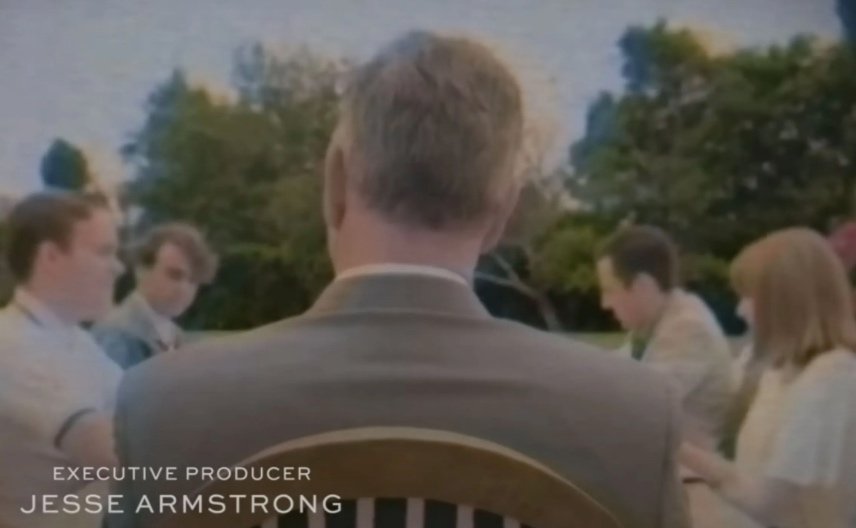
Drink rather than eat if one is upset. Alcohol can loosen one up and one can be delightful and witty at parties. Food just makes one fat.

Never use the word “classy” or “rich.” “Classy” and “rich” are tacky. Use the word “tacky” a lot. It can apply to so many things and people.

***

I have a tortured relationship with WASPs. I attended a school from first through twelfth grade that was the bastion of WASP culture. I was a Jewish kid from the Upper West Side air dropped into an entirely different country: The Upper East Side. Two miles apart but a world away. Not that my family was poor—we were very comfortably middle class—but I felt like a country mouse in comparison. Summers, we rented in the Springs (which now is prohibitively expensive and deluxe but then was considered the sticks). My friends had indoor and outdoor pools and sometimes horses at their houses in East Hampton, Watermill and Southampton. I had to learn to adapt, so I was watchful and I did.

I read the Preppy Handbook without irony. I bought Faire Isle sweaters even though wool makes me itch, Brooks Brothers striped button down oxfords and L.L. Bean duck boots. I was relieved that I at least had straight blonde hair and light eyes. When my friends came back from Spring Break with raw, peeling noses from being exposed to sun and wind on the slopes in Vail or Gstaad, I was filled with admiration and envy.

I wanted to be a debutante like many of my friends were. I asked my dad if I was going to “come out” and he replied, “No, you’re going back in.” I wish I found what he said then as funny as I do now. But I didn’t and felt underprivileged and misunderstood.

I am loathe to admit it, but I was embarrassed to be Jewish. It seemed to be a curse to be from the Upper West Side where so many of us lived. Back then, the Maidstone and the Meadow Club in East and Southampton didn’t allow Jews. Or people of color. Supposedly now they do, but why would we want to join where we’re not wanted? Unless you were me. When I was a teenager, that’s what I aspired to.

The Maidstone is a grand, imposing building lording over miles of pristine golf course, the beach on the other side. Civility and self-control battling the wildness of the Atlantic Ocean. The Maidstone is beautiful, but intimidating and unwelcoming. The Meadow Club hides its lush grass tennis courts behind tall privet hedges. You can only catch a glimpse of the deep green and hear the echo of balls hitting against racquets from a distance, so far away that it seems to be a dream. The allure of exclusivity and the knowledge that no matter how hard I tried I would never truly be allowed in other than as a day guest, overwhelmed me with longing.

A friend invited me to one of these clubs in Southampton one day during the summer. I was in the pool with friends and other kids. One girl I knew called out, “Raise your hand if you’re a member!” I didn’t. She looked at me and said “Oh, of course you’re not a member, Zandy. You’re Jewish.” Instead of telling her to fuck right off like I hope I’d do now, I was ashamed that I was, in fact, Jewish. I was a smart girl, but had no idea that there was something deeply corrupt about WASP Country Club life and because I was brainwashed into thinking I was less than.

I thought this exclusivity meant access to beauty, grace, civility and taste. In fact, in so many ways it’s the opposite.

Yes, the houses were grand and wondrous, with acres of land nobody used unless they were walking towards the pool, but inside many of them were rotten.

Some of the saddest kids I knew were from wealthy families. They wanted for nothing except ambition and the love of their parents. Loneliness, abandonment and neglect are traumatic, no matter if you’re a child of privilege or of poverty.

I saw many people who kept these homes running, treated terribly. Most often ignored, but sometimes spoken harshly to in front of me. And parents taught their kids by example to talk to “the help” the same way. Most of my friends were decent people, but I certainly witnessed this behavior and it was disturbing.

There is something relaxing and comforting about a culture that never really changes. WASPs have pretty much stayed the same. They dress the same, patronize the same restaurants, attend the same parties and charity events. Dutiful, yes, but fealty to charity is more often an excuse to see and be seen than it is to be generous.

I’ve seen “noblesse oblige” thrown around the past week in reference to George H.W. Bush. The term was used as a compliment, but it’s not. It implies you are nice to people beneath you. Literally that you are obliged as nobility to be gracious to the “little people.” This is very different from being generous to people who are less fortunate. The latter we should do because it’s right, and not because we think we’re nobler than the poor, nor should it be considered virtuous to help make people’s lives better.

WASP culture is a sedate form of capitalism. After all, the Vanderbilts and the Carnegies were once robber barons. WASPs’ homes aren’t tasteless like Trump’s, but their country estates are protected by hedges that whisper “Look but don’t touch” to the unwashed masses. Non-white people allowed inside are more often than not, staff.

There is also a low-level hum of misogyny running through WASP culture. At my all-girl school, we were expected to achieve and excel in every way, in academics and sports and socially, so we would be accepted to an Ivy League or at least an Ivy League adjacent college. But it wasn’t to become scientists or philosophers or teachers. It was really to meet a pedigreed, acceptable, eligible man who might later go into finance or corporate law or if he must, politics. It was still very much the way it had been forever—get pregnant, try to look nice and be supportive. Have a brief, illicit affair if you get too bored, but keep it quiet and don’t let it throw you too far off-track. You must keep up appearances. Your husband is probably having affairs too. Just remember to give generously back to your alma mater and write positive things about your life in the alumni newsletter.

Sometimes that hum is more like a scream. Even though he is Catholic, Bret Kavanaugh is the poster boy for entitled WASP misogyny. The Prep school culture, particularly on the East Coast, can be deeply toxic. Preparatory for college fraternities. This has been the gist: girls aren’t equals, they are conquests. If they won’t give into you, they’re bitches. If they do give in to you, they’re sluts. If they’re drunk or just vulnerable, they’re for the taking. And many of these schools, who have prided themselves on their civility and reputation, look the other way, because boys will be boys.

I was walking on the Upper East Side a few years back with a friend of mine who had gone to a prestigious all-male school in that neighborhood. We saw a group of boys in their prep school uniforms—khakis, button-down oxford, blazers and red ties—and my friend said, “Ah yes. Here are the date-rapists-in-training.” He went to that school. He knew the culture inside and out. After the Kavanaugh hearings, I heard his sentence over and over in my head. He’s right. And this culture has to end.

I am all for politeness and civility. I try not to curse and make sure my two young boys don’t either. I tell them they have to have good manners. I want them to dress with care —I even bought them navy blue blazers and fishermen sweaters— excel, and go to great colleges. And I hope they will be excellent tennis players. But I have no interest in them aspiring to be WASPs.

This summer I went back to same country club where I was told I couldn’t be a member. Nothing really had changed, except those kids in the pool had become middle aged, with kids of their own who were that same age we were that summer. These women were wearing the same things their mothers wore—Jack Rogers sandals, chunky gold seashell earring  and Indian print blouses—and were acting the same way,—polite, but chilly. Of course it was only one drink in and if I had stayed longer and had a few more G and T’s I would have relaxed and they would have been chummier. After all, I look the part.

But that evening, I finally realized the allure of WASP culture was slipping for me. The only people of color I saw were serving behind the grill line at the snack bar. I had brought my sons with me and my little one, who is has no shortage of joie de vivre, had started doing a dance on the patio where the grownups were drinking. I received several sharp looks and realized I’d rather be with my sons than banish them to the beach where the other kids at the club were so I could get tipsy with people who didn’t fascinate me anymore by their exclusiveness. They actually seemed quite boring.

There is a connection from the civility of George Herbert Walker Bush to the chaos of the Trump Presidency, as much as pundits the last couple of weeks are loathe to admit it. Jeb! was supposed to be successor to the throne, but much to the GOP’s surprise, nobody was falling for this thinned out bloodline anymore. So Republican voters chose Trump: the antithesis of a WASP.

Fortunately there seem to be more positive forces breaking up the WASP’s hegemony as well. The 2019 Congress will have more minorities than it ever has. And young people. Our House of Representatives will finally look something like the citizens it represents.  Alexandria Ocasio-Cortez has been tweeting out photos and videos during her freshman orientation. Her transparency and excitement is in direct contrast to WASP moderation and exclusivity. This is the exact vitality we need to inject into our bloodstream. To open the window and let fresh air into a stuffy, dark room. Hopefully this new sensibility will help make our Government work for us, rather than it act like stern fathers who tell us we’re unruly, uncivil and that we must respect our elders.   

Despite its surface charms and my nostalgic pull toward it, WASP culture should fade away. Evolutionary theory says only species willing to be flexible can adapt and survive. Flexibility is not in a WASPs’ repertoire. WASPs want to stay the same and not admit the world is changing around and moving ahead of them. In this way, they are a gentler, more subtle and polite form of MAGA, Their prosperity and longevity has been based on the work of those who have toiled beneath them. Their dominance isn’t because of ingenuity or strength of character, but because these elites have always protected each other and made sure no one “unfamiliar” is admitted into their private club. WASPs’ rigidity and airlessness might be the death of them, but maybe this is ok

5 Comments
Prev / Next

Archive

  • 2026
    • Jan 10, 2026 from The Bulwark, 01/22/2025: Revisiting David Lynch's 'Mulholland Drive,' from A City on Fire
    • Jan 10, 2026 from The Bulwark, 11/14/2025: The Upside of the Lowdown
    • Jan 10, 2026 from The Bulwark, 04/10/2025: Nihilism at The White Lotus -- Season 3 Review
    • Jan 10, 2026 from The Bulwark, 07/29/2025: No Lyin' to Lyonne -- Poker Face, Season 2 Review
  • 2025
    • Jan 23, 2025 Why ‘My Brilliant Friend’ Resonates Beyond Italy (from The Bulwark, January 13, 2025)
  • 2024
    • Nov 16, 2024 'Evil' Comes to an End (from THE BULWARK, 09/20/2024)
  • 2023
    • Dec 2, 2023 ‘Oldboy’ and the Art of Preparing Your Audience for the Unexpected
    • Dec 2, 2023 Ryan Gosling: A Professional
    • Dec 2, 2023 ‘Risky Business’ Forty Years Later: The Movie That Made Tom Cruise "Tom Cruise."
    • Dec 2, 2023 Poker Face takes viewers back to the 1970s, temperamentally, every Thursday.
    • Apr 14, 2023 Ubu Roy
    • Jan 16, 2023 Portrait of Postpartum Depression in ‘Fleishman Is in Trouble’ from The Bulwark 1/11/23
    • Jan 9, 2023 The Case for ‘The Family Stone’ from The Bulwark, 12/23/2022
    • Jan 9, 2023 The Renewed Relevance of ‘Rosemary’s Baby’ from The Bulwark, 10/31/2022
    • Jan 9, 2023 ‘Belle de Jour,’ an Un-Erotic Masterpiece, from The Bulwark, 03/30/2022
    • Jan 9, 2023 ‘The Sentinel’ at 45: Terribly scary, with emphasis on "Terribly," Bulwark, 1/11/2022
    • Jan 9, 2023 The 1970s: A Down and Dirty Decade of Horror Filmmaking - from The Bulwark, 10/30/2021
  • 2019
    • Dec 14, 2019 Oaxaca
    • Mar 22, 2019 Fire Island
  • 2018
    • Dec 10, 2018 Goodbye, My Brother
    • Sep 20, 2018 I'm Sorry
    • Jun 23, 2018 You Can Judge a Book By Its Jacket
  • 2017
    • Oct 24, 2017 The Pickup Artist
    • Aug 31, 2017 Emergency Style Tips for Men If They Ever Want to Have Sex with A Human Being
    • Aug 25, 2017 Puppies vs. Trump
    • Aug 25, 2017 Puppygate
  • 2016
    • Jul 6, 2016 The Wrong Side of 40
    • Apr 28, 2016 Prince
    • Jan 23, 2016 David Bowie
    • Jan 13, 2016 The Force Awakens: One Woman's Conversion
  • 2015
    • Aug 3, 2015 The Odeon
    • May 11, 2015 Brother Theodore
    • Apr 22, 2015 Amy Pascal and Jezebel